Some years ago I was happy to post Brandon Adam's Collapsible Outline of Owen on Hebrews 8:6-13. Today I would like to post another such outline offered by Brandon, this time of Nehemiah Coxe's A Discourse of the Covenants that God Made with Men before the Law. These outlines should prove quite helpful when reading the important work Covenant Theology: From Adam to Christ, which contains both Coxe's Discourse of the Covenants and Owen's Exposition of Hebrews 8:6-13.
I would also highly recommend checking out Brandon Adams' 1689 Federalism website, as well as his blog Contrast, which has many excellent articles. Thanks Brandon!
"But of Him you are in Christ Jesus, who became for us wisdom from God — and righteousness and sanctification and redemption — that, as it is written, 'He who glories, let him glory in the Lord.'"
Showing posts with label 1689 Federalism. Show all posts
Tuesday, June 06, 2017
Thursday, May 07, 2015
The Primacy of the Abrahamic Covenant by Jeff Johnson
As the description on the YouTube pages says, in this message "Pastor Jeff Johnson, author of The Fatal Flaw Behind The Theology of Infant Baptism, shows us how the Abrahamic Covenant unifies the Old Testament and the New Testament; the Old Covenant and the New Covenant, the demands of the law and the glory of grace." I hope all the blog's readers will find it helpful. If you want to learn more from Jeff on these foundational issues, I highly recommend two of his books:The Fatal Flaw Behind The Theology of Infant Baptism (The single best book I have ever read on the subject)
The Kingdom of God: A Baptist Expression of Covenant & Biblical TheologyI am grateful to have Jeff as a blog partner, and I hope you will find his writing as beneficial as I have.
Thursday, April 16, 2015
A Brief Survey of Covenant Theology by Richard Barcellos
Many of the blog's readers will no doubt be familiar with Richard Barcellos, especially if you have watched the excellent introductory videos at the 1689 Federalism website (which I have recommended in the past). For those who are not familiar with him, you may read a little more about him on our Reformed Baptist Resources page or check out his bio page at the website of Grace Reformed Baptist Church, where he serves as a pastor. In the videos posted above, Dr. Barcellos offers a very helpful overview of Covenant Theology from a Reformed Baptist perspective. I have included all three of them here for your convenience.
Thursday, March 26, 2015
A Couple of Helpful Videos From the 1689 Federalism Website
| Discover the covenantal heritage of the 2nd London Baptist Confession of Faith. |
The site also includes some helpful charts and a list of resources.
Friday, September 05, 2014
"A Few Thoughts for Consideration in the Modern Republication Debate"
The Particular Voices blog recently posted a brief article entitled A Few Thoughts for Consideration in the Modern Republication Debate. The article offers for Presbyterians a summary of points in favor and against the notion that the Mosaic Covenant is a republication of the Covenant of Works. Here is the primary portion of the post for your consideration.
These thoughts are directed primarily at members in the OPC and PCA.
For those contra republication:1. The view that the Mosaic covenant was a covenant of works is a view found among Reformed divines in the 17th and 16th centuries.2. The Westminster Confession of Faith is not the exclusive expression or boundary of Reformed orthodoxy.For those pro republication:1. The fact that a given divine at the Westminster Assembly held to a given view does not mean that the Confession itself either reflects, includes, or accounts for their view. They debated many things. The conclusion of the debates was a majority vote in one direction, not a unanimous vote.2. A covenant of works and a covenant of grace are as different as wood and stone. They are different “substances.” If the Mosaic covenant is a formal covenant of works (not just containing a remembrance of Adam’s covenant) it cannot be the covenant grace. See John Ball, A Treatise of the Covenant of Grace (London: Printed by G. Miller, 1645), 93-95. Ball is discussing John Cameron’s view that the Mosaic covenant (the old covenant) is neither the covenant of works nor the covenant of grace but a legal covenant for the nation of Israel to live life in the land of Canaan. Ball concludes that this view makes the old covenant differ from the new in substance. See also John Owen, A Continuation of the Exposition of the Epistle of Paul the Apostle to the Hebrews (London: Printed for Nathaniel Ponder, 1680), 324-42. Owen considers the majority view as expressed in the WCF and rejects it because he views the Mosaic covenant as a works covenant for life in the land. This is the result of the simple logic of substance as applied to covenant theology.
Thursday, February 27, 2014
The Kingdom of God by Jeff Johnson Is Now Avaliable
The wait is finally over! Jeff Johnson's new book, The Kingdom of God: A Baptist Expression of Covenant & Biblical Theology, is now available for order. Here is the description of the book at the website:
Is there a central plot to the Bible? And if so, why is the Bible divided into two different testaments? Moreover, how do these two testaments relate to each other? No doubt, it can be overwhelming to traverse the various covenants of the Bible. And it can be difficult to understand the unity and diversity of the Old and New Testaments. The Kingdom of God: A Baptist Expression of Biblical & Covenant Theology explains why the maze of the Old and New Testaments cannot be properly navigated or understood without a knowledge of the dual (law and gospel) nature of the Abrahamic Covenant. For the law of the Old Covenant and the grace of the New Covenant flow out of the Abrahamic Covenant and are wonderfully reunited in the gospel of Jesus Christ. In other words, out of the earlier dichotomy comes the later unity of the gospel message.
Here is what some scholars are saying about the book:
“Jeff Johnson has given us a lot to chew on. This treatment of the covenants gives a tightly argued discussion of the relation between the covenant of works and the covenant of grace…Johnson gives a cover-to-cover, Genesis-to-Revelation dramatic presentation of the story of the outworking of the covenant of grace through the conflict of the two seeds. It is gripping and compelling while it illustrates the doctrinal argument with power. He tells the story that is the ontological rubric behind all good stories. Giving serious attention to Johnson’s tenacious engagement with the biblical theme of The Kingdom of God will expand one’s personal knowledge of Scripture, extend one’s confidence in the wisdom and certainty of divine providence, and exact transparent and pure praise to God for his invincible grace.” -Tom Nettles, Professor of Historical Theology, The Southern Baptist Theological Seminary
“Of the many books that exist on covenant theology, rare are those that are accessible to neophytes while at the same time instructing the well-read student on the subject. This one does both. If Jeff Johnson’s first book, The Fatal Flaw, explained what Baptist covenant theology is not, The Kingdom of God explains what it is. In my view, the most important contribution of this work is to bring us the history of salvation through all the biblical covenants in a Reformed Baptist perspective. The deeper treatment that Johnson gives to the Abrahamic Covenant in this work is one of the clearest statements I have read. After you finish reading it, you will have a clearer view of the big picture of the kingdom of God.” -Pascal Denault, Author of The Distinctiveness of Baptist Covenant Theology
“The Kingdom of God by Jeffrey Johnson is a work I commend to be read both by Baptists and Paedobaptists. He explains the biblical covenants in relationship to the kingdom of God through the whole Bible…I recommend the reading of The Kingdom of God as a welcomed addition to Baptist covenantal theology. I think you will be blessed to read his presentation of the Lord Jesus Christ as fulfilling the Covenant of Works for us that God grace may justly fall upon sinners.” -Fred Malone, Author of The Baptism of Disciples Alone
I am sure many of you, like me, have been anxiously awaiting this book. You may order a copy for a very good price at Free Grace Press here.
Other titles by Jeff Johnson include:
The Fatal Flaw of the Theology Behind Infant Baptism (The single best book on the subject I have ever read)
The Church: Why Bother? (On the nature, purpose, and functions of the local church)
Monday, December 02, 2013
Recovering a Covenantal Heritage: Essays in Baptist Covenant Theology
In case our blog's readers haven't noticed yet, over at the 1689 Federalism website, on their books page, is a sign up form to be notified when the forthcoming book, Recovering a Covenantal Heritage: Essays in Baptist Covenant Theology, is published.
It promises to be an important work from a collection of excellent Reformed Baptist scholars, including our own Jeff Johnson. Richard Barcellos posted here back in February that he is editing the book.
Here is the description given on the sign up page:
It promises to be an important work from a collection of excellent Reformed Baptist scholars, including our own Jeff Johnson. Richard Barcellos posted here back in February that he is editing the book.
Here is the description given on the sign up page:
Table of Contents
Introduction, James M. Renihan, Ph.D.
Historical
1. A Brief Overview of Seventeenth-Century Reformed Orthodox Federalism, Richard C. Barcellos, Ph.D.
2. Covenant Theology in the First and Second London Confessions of Faith, James M. Renihan, Ph.D.
3. By Farther Steps: A Seventeenth-Century Particular Baptist Covenant Theology, Pascal Denault, Th.M.
4. The Puritan Argument for the Immersion of Believers: How Seventeenth-Century Baptists Utilized the Regulative Principle of Worship, Steve Weaver
5. The Antipaedobaptism of John Tombes, Michael T. Renihan, Ph.D.
6. The Abrahamic Covenant in the Thought of John Tombes, Michael T. Renihan, Ph.D.
7. John Owen on the Mosaic Covenant, Thomas E. Hicks, Jr., Ph.D.
8. A ‘Novel’ Approach to Credobaptist and Paedobaptist Polemics, Jeffrey A. Massey
Biblical
9. The Fatal Flaw of Infant Baptism: The Dichotomous Nature of the Abrahamic Covenant, Jeffrey D. Johnson
10. The Difference Between the Old and New Covenants: John Owen on Hebrews 8:6, John Owen
11. The Newness of the New Covenant (Part 1), James R. White, Th.D.
12. The Newness of the New Covenant (Part 2), James R. White, Th.D.
13. Acts 2:39 in its Context: An Exegetical Summary of Acts 2:39 and Paedobaptism (Part 1), Jamin Hübner
14. Acts 2:39 in its Context: Case Studies in Paedobaptist Interpretations of Acts 2:39 (Part 2), Jamin Hübner
15. An Exegetical Appraisal of Colossians 2:11-12, Richard C. Barcellos, Ph.D.
It looks like this book has been in the works for some time. I hope it won't be much longer until it is published.Biblical-Theological
16. Reformed Baptist Covenant Theology and Biblical Theology, Micah and Samuel Renihan
Thursday, September 19, 2013
Jeff Johnson Interview Regarding The Fatal Flaw
In case some of our readers missed it, last month Brandon Adams (author of the Contrast blog) interviewed our own Jeff Johnson about his book The Fatal Flaw of the Theology Behind Infant Baptism. The interview was posted as a podcast in two parts at the Confessing Baptist website:
You will want to listen to this intriguing discussion about the nature and importance of Reformed Baptist Covenant Theology with a man who is quickly becoming one of the leading Reformed Baptist theologians of our day.
Part OnePart Two
You will want to listen to this intriguing discussion about the nature and importance of Reformed Baptist Covenant Theology with a man who is quickly becoming one of the leading Reformed Baptist theologians of our day.
Monday, September 16, 2013
Check Out the 1689 Federalism Website
| Discover the covenantal heritage of the 2nd London Baptist Confession of Faith. |
There you can watch a number of helpful introductory videos that include:
An Introduction to 1689 FederalismThe site also includes some helpful charts and a list of resources.
1689 Federalism Versus Westminster Federalism
1689 Federalism Versus Dispensationalism
1689 Federalism Versus New Covenant Theology and Progressive Covenantalism
1689 Federalism Versus 20th Century Reformed Baptists
Thursday, September 05, 2013
The Kingdom of God: A Baptist Expression of Biblical & Covenant Theology by Jeff Johnson
The blog's readers may well remember that I once recommended Jeff Johnson's book The Fatal Flaw of the Theology Behind Infant Baptism as the best I have read on the subject. I also described it as a very helpful book in understanding Covenant Theology from a Reformed Baptist perspective.
Now, however, Jeff Johnson has written a book that is soon to be published and that is devoted entirely to an explanation of Covenant Theology from a distinctively Reformed Baptist perspective. Here is the information about the book:
Is there a central plot to the Bible? And if so, why is the Bible divided into two different testaments? Moreover, how do these two testaments relate to each other? No doubt, it can be overwhelming to traverse the various covenants of the Bible. And it can be difficult to understand the unity and diversity of the Old and New Testaments. The Kingdom of God: A Baptist Expression of Biblical & Covenant Theology explains why the maze of the Old and New Testaments cannot be properly navigated or understood without a knowledge of the dual (law and gospel) nature of the Abrahamic Covenant. For the law of the Old Covenant and the grace of the New Covenant flow out of the Abrahamic Covenant and are wonderfully reunited in the gospel of Jesus Christ. In other words, out of the earlier dichotomy comes the later unity of the gospel message.
Here is a preview of the contents of the book:
Contents
Introduction
PART ONE
THE KINGDOM OF GOD & BAPTIST COVENANT THEOLOGY
1. The Dichotomous Nature
of the Abrahamic Covenant
2. The Wording of the Abrahamic Covenant
3. Abraham’s Two Seeds
4. Abraham’s Physical Seed
5. Abraham’s Spiritual Seed
6. New Testament Affirmation
7. The Dual Covenantal Framework
of the Book of Romans
8. The Separation of Law & Gospel
PART TWO
THE KINGDOM OF GOD & BIBLICAL THEOLOGY
9. The Rise of the Kingdom
10. The Fall of the Kingdom
11. The Hope of the Kingdom
12. The Hope of the Kingdom Preserved
13. The Promise to Restore the Kingdom
14. The High Cost of Restoring the Kingdom
15. The Priest of the Kingdom
16. The King of the Kingdom
17. The Inauguration of the Kingdom
18. The Consummation of the Kingdom
Here is what one respected Reformed Baptist scholar has to say about the book:
“On the many books that exist on covenant theology, rare are those that are accessible to neophytes while at the same time instructing the well read student on the subject. This one does both. If Jeffrey Johnson’s first book, The Fatal Flaw, explained what Baptist covenant theology is not, The Kingdom of God explains what it is. In my view, the most important contribution of this work is to bring us the history of salvation through all the biblical covenants in a Reformed Baptist perspective. The deeper treatment that Jeffrey Johnson gives to the Abrahamic Covenant in this work is one of the clearest statements I have read. After you finish reading it, you will have a clearer view of the big picture of the kingdom of God.”
Pascal Denault
Author of The Distinctiveness of Baptist Covenant Theology
I am told the book hopefully will be available by December. If you want to be on the email list to be one of the first to hear when the book is ready, you can sign up at the 1689 Federalism website here.
Personally, I can't wait to read this book, and I hope all the blog's readers will want to read it as well. Stay tuned for more information in the coming weeks and months.
Thursday, August 22, 2013
Eternal Life and the Mosaic Covenant
Was
the Mosaic Covenant only concerned about temporal blessings? Was living long and
peaceful lives in a land filled with milk and honey the ultimate reward for
obeying the Law of Moses? Or was eternal life the ultimate promise of the
Mosaic Covenant.
New Covenant Theology (NCT) views the Law of Moses as a code of morality that only demanded external obedience. Some NCT proponents have even sought to explain away the tenth commandment (thou shalt not covet) as a command not to steal. Regardless, for NCT, the Mosaic Covenant was merely an external covenant that promised external blessings to an external people. In some ways, NCT looks at the Mosaic Covenant and the nation of Israel in the same way Dispensationalists look at the New Covenant and the church—parenthetical to God’s overall redemptive plan.
I, on the other hand, believe that the Mosaic Covenant was more than just a parenthetical and typological covenant that was given to foreshadow New Covenant realities. In addition to that, I believe that the Mosaic Covenant was designed for Christ Jesus to fulfill in order to establish eternal life for all who believe. In other words, for national Israel, the Mosaic Covenant was typological and provided only temporal and physical blessings, but for Christ (the true Israel of God), who fulfilled the Mosaic Covenant, it brought eternal and spiritual blessings (i.e., eternal life). In other words, the Mosaic Covenant of works was necessary because the New Covenant of grace was born out of its fulfillment.
With this in mind, there are at least nine reasons why I believe that the Mosaic Covenant promised eternal life.
To say that the Mosaic Covenant only promised physical and temporal blessings is to say that the Abrahamic Covenant only promised physical and temporal blessings. This is because the promises of the Mosaic Covenant are one and the same as the promises given to Abraham. “I will be your God, and you shall be my people” was the ultimate goal of both the Abrahamic and the Mosaic Covenant. And yes, these spiritual promises were conditional under both the Abrahamic and Mosaic Covenant, but to say that the Mosaic Covenant did not promises spiritual and eternal promises is to say that the Abrahamic Covenant did not flow out of the Abrahamic Covenant.
According to Moses, the reward for obedience was not merely a prosperous temporal life but eternal life: “You shall therefore keep my statutes and my rules; if a person does them, he shall live by them” (Lev. 18:5). This is due to the fact that the curses of the Old Covenant not only threatened Israel with expulsion from the promised land but also ultimately, threatened the physical seed of Abraham with being “cut off” from God. For it is written, “the curses written in this book will settle upon him, and the Lord will blot out his name from under heaven” (Deut. 29:20). For the land of promise was to be more than a geographical plot of land for the children of Israel to inhabit, but more importantly it was to be the place where God’s presence would dwell with man. Therefore, to be cut off and expelled from the land implied the greater danger of being cut off and exiled from God.
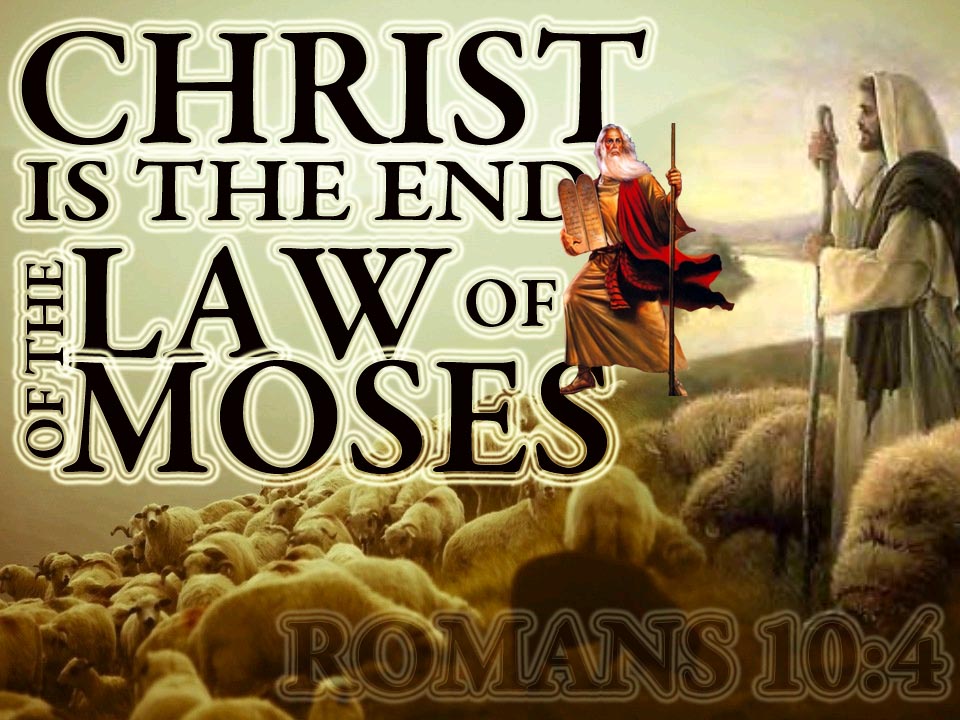
The Apostle Paul understood that Moses was speaking of eternal life when he compared and contrasted the Mosaic Covenant with the New Covenant: “For Moses writes about the righteousness that is based on the law, that the person who does the commandments shall live by them. But the righteousness based on faith says...For with the heart one believes and is justified, and with the mouth one confesses and is saved” (Rom. 10:5, 10). In other words, Paul is not making a distinction between the “life” that was promised in the Mosaic Covenant from the “life” that is promised in the New Covenant. Rather, Paul is contrasting how “life” was to be obtained in the Mosaic Covenant from how “life” is obtained in the New Covenant, which is a distinction between the works of the law and faith in Christ Jesus. For as Paul says in another place: “But law is not of faith, rather ‘The one who does them shall live by them’” (Gal. 3:12).
Moreover, when a certain person came up to Christ asking “what good deed must I do to have eternal life?” The Lord responded by saying, “If you would enter life, keep the commandments” (Matt. 19:16-18).[1] For even the Lord Jesus affirmed that it was not merely a long physical life but eternal life that the Law of Moses promised to those who loved God with all their hearts and loved their neighbor as themselves (Luke 10:25-29). Which conversely affirms that eternal death awaits all those who fail to love God in the slightest with all their hearts, minds, strength and souls. Calvin was right when he claimed, “It is quite certain that the primary promises, which contained that covenant ratified with the Israelites by God under the Old Testament, were spiritual and referred to eternal life.”[2]
Moreover, because the Mosaic Covenant was a republication of the moral law of God, it by necessity promised eternal life for all who perfectly obeyed God. Unless the Law of Moses was something less than the perfect moral law of God, then it held out eternal life for those who kept it and eternal death for those who did not. Thus, Samuel Petto (1624-1711) concluded:
And it is important to note that the covenant of works that God established in the Abrahamic and Mosaic Covenants is same as the covenant of works that was established with Adam, for it consisted of the same moral law with the same blessings and curses. Eschatological life and death were at the heart of both. As Edward Fisher writes, “the law delivered on Mount Sinai, and formerly engraven on man’s heart, was one and the same; so that at Mount Sinai the Lord delivered no new thing.”[4] Therefore, these two covenants of works are one and the same, but were issued with two different federal heads. This safely removes Christ from the membership of the broken Adamic Covenant of works, while placing Him in the revised covenant of works that was established in the Abrahamic and Mosaic Covenants.
Consequently, the federal head of the Adamic Covenant of works is Adam who brought death upon all humanity, while the federal head of the Abrahamic/Mosaic Covenant of works is Christ Jesus who thankfully brings life to all who are united to Him by faith. Thus, we are condemned in Adam who broke the first covenant of works but justified in Christ who fulfilled the second covenant of works. But again, the same moral law that was broken by the first Adam was the moral law that was satisfied by the second Adam (Rom. 5:12-21).
This also means that the Adamic Covenant of works is still currently holding Adam’s natural seed captive to the curses of the law (i.e., death), while the Abrahamic/Mosaic Covenant of works has been satisfied for all of Abraham’s spiritual seed who are heirs to the blessings of the law (i.e., life). In short, the first covenant of works (made with the first Adam) remains broken, while the second covenant of works (made with the second Adam) is fulfilled. Consequently, a person is either in union with the first Adam or in union with the second Adam. And depending upon which union that is, depends if that person is under law or under grace.
And just because it was impossible for the physical seed of Abraham to fulfill such a strict and demanding covenant did not mean that its promises and curses were nullified.[5] For their responsibility to obey was not contingent upon their ability to obey. This may seem unfair, but the moral law by its very nature cannot be anything but fair. And this is why the Mosaic Covenant was an administration unto death rather than unto life, for by the works of the law no flesh shall be justified.
Nevertheless, for this reason, the Mosaic Covenant was not hypothetical. The covenant of works condemns all those who are not found righteous in the sight of God’s moral law. Hell is proof that the terms of the covenant of works are unchangeable. The Cross of Calvary is proof that the covenant was not hypothetical.
For the blessings of the law to be established, then the physical seed of Abraham (i.e., Christ) had to fulfill the demands and the curses of the law. For God to be both just and merciful there is simply no way around this. Thus, for sinners, the law was given to awaken them to their own sinfulness and administer death, but for the righteous (i.e., Christ) it was given to establish life.
Christ fulfilled is the moral law of God in His life and death. And if the Law of Moses is the moral law of God, then Christ fulfilled it. When the Bible speaks of Christ obeying the law, it is speaking primarily of the Law of Moses and not to the law of creation (which, nevertheless, I believe, that they are the same).
Although the Mosaic Covenant was merely typological in the Old Testament dispensation, the promises spoke of eternal realities. For instance, take this quote by G. K. Beale:
When the Scripture speaks of the Mosaic Covenant as being physical and the New Covenant as being spiritual, this does not mean that the Old Covenant was unconcerned about spiritual realities (e.g., circumcised heart, eternal life) or that the New Covenant is unconcerned about physical realities (e.g., a new earth, a resurrected body, etc…). Rather, the difference between the Old and New Covenants is that they approach the physical and spiritual concerns of the Abrahamic Covenant from two different directions or starting points.
For instance, the Old Covenant was ineffectual because it sought to reform the inner man by external means. For instance, the Mosaic Covenant started by issuing outward circumcision but afterwards it demanded inward circumcision. Moreover, once the Old Covenant law was etched in stone, it required inward obedience from the heart. Moreover, though the physical children of Abraham were given a physical land and established in a physical kingdom, they would not fulfill their ultimate purpose until they filled the land of promise (i.e., the earth) with the presence, knowledge, and glory of God as the spiritual and holy people of God. Yet, because the Old Covenant started from the outside, it remained ineffectual in establishing for its unregenerate membership the spiritual promise of the Abrahamic Covenant. For no matter how hard one tries, outward legislation (regardless of the purity of the laws) can never change sinful and depraved hearts.
On the other hand, the New Covenant is effectual in securing the physical promises of the Abrahamic Covenant because it starts not with the physical but with the spiritual realities first. For example, a circumcised heart precedes water baptism, and spiritual regeneration goes before outward obedience of the law. Moreover, before the saints inherit the world at the end of the age, they must be born again into a spiritual kingdom in the present age. The New Covenant will bring about universal peace, prosperity, and a new heavens and a new earth where only righteousness dwells, but only because it starts by calling out a spiritual people unto a heavenly kingdom in the midst of this fallen world first.
Therefore, in this sense, the promises of the Old and New Covenant are the same, but they have two different means in which they seek to accomplish their end objectives. As it were, the Old Covenant, by the works of the law, sought to enter the house of God through the back door, which always remains locked for the sinner. By grace, on the other hand, the New Covenant has opened the front door of the house of God for the believer through the finished work of Christ Jesus. For Christ went through the back door by obedience of the law so that he could open the front door for all who enter by faith.
For this reason, the New Covenant is superior to the Old Covenant. In that, unlike the Old Covenant, the grace of the New Covenant has the power to save sinners and usher believers into the presence of God because it begins by effectually changing their hearts.
Nevertheless, though God redeems the soul before He redeems the body, God revealed the law of the Old Covenant before He revealed the grace of the New Covenant. In other words, though the spiritual kingdom of this age comes before the creation of the new heavens and the new earth in the age to come, the spiritual kingdom of this age was foreshadowed by the physical kingdom of Israel in the previous age.
In the order of salvation, the spiritual comes before the physical, but in the order of revelation, the physical is revealed before the spiritual.
Thus, in regards to the order of divine revelation, the ineffectual and physical realities of the Old Covenant, which were revealed first, were only shadows and types of the effectual and spiritual realities of the New Covenant, which were revealed afterwards. “For…the law has but a shadow of the good things to come instead of the true form of these realities” (Heb. 10:1).
But this only stands to reason. Because the Old Covenant could not fulfill the spiritual promises of the Abrahamic Covenant, even the physical promises of the Abrahamic Covenant were never fully fulfilled either. The physical seed, land, kingdom, and temple may have come first and looked like the real thing, but because of their inability to produce the inward and spiritual promises, they were merely pictures or empty and typological shadows of the spiritual and physical realities, which were to be established afterwards by the New Covenant. To put it more plainly, though the Mosaic Covenant promised eternal life it could not provide eternal life for the sinner, therefore the Mosaic Covenant at best was a temporal and typological covenant that pointed to the spiritual and eternal realities that would afterwards be established in the New Covenant.
For this reason, the Old Covenant was not only ineffectual in establishing the promises of Abraham, it was a temporal covenant that was not designed to last forever. The ineffectual shadows of the Old Covenant where to continue until the effectual and eternal realities of the New Covenant were establishment in Christ Jesus and then they were to pass away.
Conclusion
New Covenant Theology (NCT) views the Law of Moses as a code of morality that only demanded external obedience. Some NCT proponents have even sought to explain away the tenth commandment (thou shalt not covet) as a command not to steal. Regardless, for NCT, the Mosaic Covenant was merely an external covenant that promised external blessings to an external people. In some ways, NCT looks at the Mosaic Covenant and the nation of Israel in the same way Dispensationalists look at the New Covenant and the church—parenthetical to God’s overall redemptive plan.
I, on the other hand, believe that the Mosaic Covenant was more than just a parenthetical and typological covenant that was given to foreshadow New Covenant realities. In addition to that, I believe that the Mosaic Covenant was designed for Christ Jesus to fulfill in order to establish eternal life for all who believe. In other words, for national Israel, the Mosaic Covenant was typological and provided only temporal and physical blessings, but for Christ (the true Israel of God), who fulfilled the Mosaic Covenant, it brought eternal and spiritual blessings (i.e., eternal life). In other words, the Mosaic Covenant of works was necessary because the New Covenant of grace was born out of its fulfillment.
With this in mind, there are at least nine reasons why I believe that the Mosaic Covenant promised eternal life.
1. The Promises
of Mosaic Covenant Flowed Out of the Promises of the Abrahamic Covenant
To say that the Mosaic Covenant only promised physical and temporal blessings is to say that the Abrahamic Covenant only promised physical and temporal blessings. This is because the promises of the Mosaic Covenant are one and the same as the promises given to Abraham. “I will be your God, and you shall be my people” was the ultimate goal of both the Abrahamic and the Mosaic Covenant. And yes, these spiritual promises were conditional under both the Abrahamic and Mosaic Covenant, but to say that the Mosaic Covenant did not promises spiritual and eternal promises is to say that the Abrahamic Covenant did not flow out of the Abrahamic Covenant.
2. Moses Taught
that Eternal Life was Promised in the Mosaic Covenant
According to Moses, the reward for obedience was not merely a prosperous temporal life but eternal life: “You shall therefore keep my statutes and my rules; if a person does them, he shall live by them” (Lev. 18:5). This is due to the fact that the curses of the Old Covenant not only threatened Israel with expulsion from the promised land but also ultimately, threatened the physical seed of Abraham with being “cut off” from God. For it is written, “the curses written in this book will settle upon him, and the Lord will blot out his name from under heaven” (Deut. 29:20). For the land of promise was to be more than a geographical plot of land for the children of Israel to inhabit, but more importantly it was to be the place where God’s presence would dwell with man. Therefore, to be cut off and expelled from the land implied the greater danger of being cut off and exiled from God.
3. Paul Taught
that Eternal Life was Promised in the Mosaic Covenant
The Apostle Paul understood that Moses was speaking of eternal life when he compared and contrasted the Mosaic Covenant with the New Covenant: “For Moses writes about the righteousness that is based on the law, that the person who does the commandments shall live by them. But the righteousness based on faith says...For with the heart one believes and is justified, and with the mouth one confesses and is saved” (Rom. 10:5, 10). In other words, Paul is not making a distinction between the “life” that was promised in the Mosaic Covenant from the “life” that is promised in the New Covenant. Rather, Paul is contrasting how “life” was to be obtained in the Mosaic Covenant from how “life” is obtained in the New Covenant, which is a distinction between the works of the law and faith in Christ Jesus. For as Paul says in another place: “But law is not of faith, rather ‘The one who does them shall live by them’” (Gal. 3:12).
4. Christ Taught that Eternal Life was Promised
in the Mosaic Covenant
Moreover, when a certain person came up to Christ asking “what good deed must I do to have eternal life?” The Lord responded by saying, “If you would enter life, keep the commandments” (Matt. 19:16-18).[1] For even the Lord Jesus affirmed that it was not merely a long physical life but eternal life that the Law of Moses promised to those who loved God with all their hearts and loved their neighbor as themselves (Luke 10:25-29). Which conversely affirms that eternal death awaits all those who fail to love God in the slightest with all their hearts, minds, strength and souls. Calvin was right when he claimed, “It is quite certain that the primary promises, which contained that covenant ratified with the Israelites by God under the Old Testament, were spiritual and referred to eternal life.”[2]
5. If the Law was Spiritual, then the Promises Must Have Been Spiritual
(i.e., Promising Eternal Life)
Moreover, because the Mosaic Covenant was a republication of the moral law of God, it by necessity promised eternal life for all who perfectly obeyed God. Unless the Law of Moses was something less than the perfect moral law of God, then it held out eternal life for those who kept it and eternal death for those who did not. Thus, Samuel Petto (1624-1711) concluded:
Now
the Sinai covenant is a platform of the legal righteousness which was
indispensably necessary unto life; there it is deciphered, delineated, and
described, more clearly than in any other federal expressure. The Sinai
covenant excels all other, in discovering what that righteousness is, upon
which we enjoy eternal life.[3]
Again, NCT teaches that the Law of Moses merely demanded external obedience, and thus it would make
sense that external obedience cannot offer spiritual life. But, if the Law of Moses is spiritual (the perfect
moral law of God), then eternal life and death must be its ultimate blessing and curse.
6. Removes Christ from the Adamic Covenant of Works
sense that external obedience cannot offer spiritual life. But, if the Law of Moses is spiritual (the perfect
moral law of God), then eternal life and death must be its ultimate blessing and curse.
6. Removes Christ from the Adamic Covenant of Works
And it is important to note that the covenant of works that God established in the Abrahamic and Mosaic Covenants is same as the covenant of works that was established with Adam, for it consisted of the same moral law with the same blessings and curses. Eschatological life and death were at the heart of both. As Edward Fisher writes, “the law delivered on Mount Sinai, and formerly engraven on man’s heart, was one and the same; so that at Mount Sinai the Lord delivered no new thing.”[4] Therefore, these two covenants of works are one and the same, but were issued with two different federal heads. This safely removes Christ from the membership of the broken Adamic Covenant of works, while placing Him in the revised covenant of works that was established in the Abrahamic and Mosaic Covenants.
Consequently, the federal head of the Adamic Covenant of works is Adam who brought death upon all humanity, while the federal head of the Abrahamic/Mosaic Covenant of works is Christ Jesus who thankfully brings life to all who are united to Him by faith. Thus, we are condemned in Adam who broke the first covenant of works but justified in Christ who fulfilled the second covenant of works. But again, the same moral law that was broken by the first Adam was the moral law that was satisfied by the second Adam (Rom. 5:12-21).
This also means that the Adamic Covenant of works is still currently holding Adam’s natural seed captive to the curses of the law (i.e., death), while the Abrahamic/Mosaic Covenant of works has been satisfied for all of Abraham’s spiritual seed who are heirs to the blessings of the law (i.e., life). In short, the first covenant of works (made with the first Adam) remains broken, while the second covenant of works (made with the second Adam) is fulfilled. Consequently, a person is either in union with the first Adam or in union with the second Adam. And depending upon which union that is, depends if that person is under law or under grace.
And just because it was impossible for the physical seed of Abraham to fulfill such a strict and demanding covenant did not mean that its promises and curses were nullified.[5] For their responsibility to obey was not contingent upon their ability to obey. This may seem unfair, but the moral law by its very nature cannot be anything but fair. And this is why the Mosaic Covenant was an administration unto death rather than unto life, for by the works of the law no flesh shall be justified.
Nevertheless, for this reason, the Mosaic Covenant was not hypothetical. The covenant of works condemns all those who are not found righteous in the sight of God’s moral law. Hell is proof that the terms of the covenant of works are unchangeable. The Cross of Calvary is proof that the covenant was not hypothetical.
For the blessings of the law to be established, then the physical seed of Abraham (i.e., Christ) had to fulfill the demands and the curses of the law. For God to be both just and merciful there is simply no way around this. Thus, for sinners, the law was given to awaken them to their own sinfulness and administer death, but for the righteous (i.e., Christ) it was given to establish life.
7. Christ Fulfilled the Law of Moses
Christ fulfilled is the moral law of God in His life and death. And if the Law of Moses is the moral law of God, then Christ fulfilled it. When the Bible speaks of Christ obeying the law, it is speaking primarily of the Law of Moses and not to the law of creation (which, nevertheless, I believe, that they are the same).
·
Matt.
5:17-19 Do not think that I have come to abolish the Law or the Prophets; I
have not come to abolish them but to fulfill them. For truly, I say to you,
until heaven and earth pass away, not an iota, not a dot, will pass from the
Law until all is accomplished.
·
· Gal
3:10-14 For all who rely on works of the law are under a curse; for it is
written, "Cursed be everyone who does not abide by all things written in
the Book of the Law, and do them." Now it is evident that no one is
justified before God by the law, for "The righteous shall live by
faith." But the law is not of
faith, rather "The one who does them shall live by them." Christ
redeemed us from the curse of the law by becoming a curse for us—for it is
written, "Cursed is everyone who is hanged on a tree"— so that in
Christ Jesus the blessing of Abraham might come to the Gentiles, so that we
might receive the promised Spirit through faith.
Galatians
3:10-14 speaks of Christ fulfilling the Law of Moses in order to bring the
spiritual blessings of Abraham to all who believe. For this reason alone, the
Mosaic Covenant must have promised more than just temporal and physical
blessings.
8. The
promises in the Mosaic Covenant spoke of Eternal Realities
Although the Mosaic Covenant was merely typological in the Old Testament dispensation, the promises spoke of eternal realities. For instance, take this quote by G. K. Beale:
…after promising
that God would restore Israel and ‘multiply men’, and make them ‘increase and
be fruitful’ (Ez. 36:10-11), he also promises a ‘multiplications’ of
fruitfulness (36:29-30), so that Israel’s formerly desolated land will ‘become
like the garden of Eden’ in which God ‘will increase their men like a flock’
(cf. 36:35-38). Then, in direct development of these preceding ideas and of
Leviticus 26:6-12 (!), Ezekiel 37:26-28 again refers to that aspect of the
promise of ‘multiplying them’ and ties it to Israel’s temple: ‘It will be an
everlasting covenant…And I will…multiply them, and will set My sanctuary in
their misdst forever. My dwelling place [or ‘tabernacle’] also will be over
them; and I will be their God, and they will be My people. And the nations will
know that I am the Lord who sanctifies Israel, when My sanctuary is in their midst
forever.’[6]
Were these promises physical or spiritual? I would
say they were both physical and spiritual. Of course, because of Israel’s
failure to obey, the nation of Israel did not enter into the fulfillment of
these promises, but regardless these promises pointed to the new heavens and
the new earth where they would be ultimately fulfilled. And if this is the
case, then the promises given in the Mosaic Covenant, although not fulfilled in
the Old Testament dispensation, looked to the greater and eternal realities to
come. For what national Israel was unable to bring about, we see Christ, the
true Israel of God, establishing.
9. The Deficiency of Mosaic Covenant was not that It Promised only Temporal
Blessings but that It was Unable to Establish the Spiritual Promises
When the Scripture speaks of the Mosaic Covenant as being physical and the New Covenant as being spiritual, this does not mean that the Old Covenant was unconcerned about spiritual realities (e.g., circumcised heart, eternal life) or that the New Covenant is unconcerned about physical realities (e.g., a new earth, a resurrected body, etc…). Rather, the difference between the Old and New Covenants is that they approach the physical and spiritual concerns of the Abrahamic Covenant from two different directions or starting points.
For instance, the Old Covenant was ineffectual because it sought to reform the inner man by external means. For instance, the Mosaic Covenant started by issuing outward circumcision but afterwards it demanded inward circumcision. Moreover, once the Old Covenant law was etched in stone, it required inward obedience from the heart. Moreover, though the physical children of Abraham were given a physical land and established in a physical kingdom, they would not fulfill their ultimate purpose until they filled the land of promise (i.e., the earth) with the presence, knowledge, and glory of God as the spiritual and holy people of God. Yet, because the Old Covenant started from the outside, it remained ineffectual in establishing for its unregenerate membership the spiritual promise of the Abrahamic Covenant. For no matter how hard one tries, outward legislation (regardless of the purity of the laws) can never change sinful and depraved hearts.
On the other hand, the New Covenant is effectual in securing the physical promises of the Abrahamic Covenant because it starts not with the physical but with the spiritual realities first. For example, a circumcised heart precedes water baptism, and spiritual regeneration goes before outward obedience of the law. Moreover, before the saints inherit the world at the end of the age, they must be born again into a spiritual kingdom in the present age. The New Covenant will bring about universal peace, prosperity, and a new heavens and a new earth where only righteousness dwells, but only because it starts by calling out a spiritual people unto a heavenly kingdom in the midst of this fallen world first.
Therefore, in this sense, the promises of the Old and New Covenant are the same, but they have two different means in which they seek to accomplish their end objectives. As it were, the Old Covenant, by the works of the law, sought to enter the house of God through the back door, which always remains locked for the sinner. By grace, on the other hand, the New Covenant has opened the front door of the house of God for the believer through the finished work of Christ Jesus. For Christ went through the back door by obedience of the law so that he could open the front door for all who enter by faith.
For this reason, the New Covenant is superior to the Old Covenant. In that, unlike the Old Covenant, the grace of the New Covenant has the power to save sinners and usher believers into the presence of God because it begins by effectually changing their hearts.
Nevertheless, though God redeems the soul before He redeems the body, God revealed the law of the Old Covenant before He revealed the grace of the New Covenant. In other words, though the spiritual kingdom of this age comes before the creation of the new heavens and the new earth in the age to come, the spiritual kingdom of this age was foreshadowed by the physical kingdom of Israel in the previous age.
In the order of salvation, the spiritual comes before the physical, but in the order of revelation, the physical is revealed before the spiritual.
The
Order of Revelation
Physical,
then Spiritual
The
Old Covenant, then the New Covenant
Law,
then Grace
Do
this, then Live
Ishmael,
then Isaac
Animal
Sacrifices, then Christ
Israel,
then the Church
The
Order of Salvation
Spiritual, then Physical
New Heart, then Obedience
Grace, then Works
Live, then do this
Redemption of the Soul, then Glorification of the
Body
The Spiritual Kingdom, then the New Earth
Thus, in regards to the order of divine revelation, the ineffectual and physical realities of the Old Covenant, which were revealed first, were only shadows and types of the effectual and spiritual realities of the New Covenant, which were revealed afterwards. “For…the law has but a shadow of the good things to come instead of the true form of these realities” (Heb. 10:1).
But this only stands to reason. Because the Old Covenant could not fulfill the spiritual promises of the Abrahamic Covenant, even the physical promises of the Abrahamic Covenant were never fully fulfilled either. The physical seed, land, kingdom, and temple may have come first and looked like the real thing, but because of their inability to produce the inward and spiritual promises, they were merely pictures or empty and typological shadows of the spiritual and physical realities, which were to be established afterwards by the New Covenant. To put it more plainly, though the Mosaic Covenant promised eternal life it could not provide eternal life for the sinner, therefore the Mosaic Covenant at best was a temporal and typological covenant that pointed to the spiritual and eternal realities that would afterwards be established in the New Covenant.
For this reason, the Old Covenant was not only ineffectual in establishing the promises of Abraham, it was a temporal covenant that was not designed to last forever. The ineffectual shadows of the Old Covenant where to continue until the effectual and eternal realities of the New Covenant were establishment in Christ Jesus and then they were to pass away.
Conclusion
For
fallen Israel, the Mosaic Covenant was unable to establish the spiritual and
eternal promises of the Abrahamic Covenant. For them, the Law of Moses, was
design to condemn them. But what Israel failed to do (due to the weakness of
their sinful flesh), Christ, the physical child of Abraham (who was born under
the Law of Moses), did. In this since the Law of Moses was not designed to condemn
but to justify Christ. In a word, because of the fallen nature of the children of
Abraham in the Old Testament dispensation, the Mosaic Covenant was merely typological
and dealt with only temporal blessings, but because of Christ stratification of
the Mosaic Covenant, the New Covenant users in the spiritual and eternal
blessings that were promised in both the Abrahamic and the Mosaic Covenants.
[1] Italics mine.
[2] John Calvin, Institutes of the Christian Religion. Edited by John T. McNeill.
Translated by Ford Lewis Battles. The Library of Christian Classics (Philadelphia: Westminster Press, 1977), 4.16.11.
[3] Samuel Petto, The Great Mystery of the Covenant of Grace (Stoke-on-Trent,
UK: Tentmaker Publishers), 129. Italics mine.
[4] Edward Fisher, The Morrow of Modern Divinity (Ross-shire,
UK: Christian Focus, 2009), 80.
[5] According to Edward Fisher,
the inability to obey the Mosaic Covenant did not make the covenant unjust:
“[F]or the Lord may justly require perfect obedience at all men’s hands, by
virtue of that covenant which was made with them in Adam; and if any man could
yield perfect obedience to the law, both in doing and suffering, he should have
eternal life; for we may not deny (says Calvin) but that the reward of eternal
salvation belongeth to the upright obedience of the law” (The Morrow of Modern Divinity, 85).
[6]
G. K. Beale, The Temple and the Church’s
Mission, 111
Friday, March 19, 2010
Suggested Changes to the Baptist Confession of 1689 - Chapter Two
I would like to continue my series of posts offering some suggestions for possible changes to the Confession. I will take up each of these chapters one at a time. Today I will focus my attention upon chapter 2, "Of God and Of the Holy Trinity." I would like to offer two suggestions for possible changes to this chapter.
First, I would suggest updating the language of paragraph 1 where it describes God as having no "passions." The paragraph currently reads:
The Lord our God is but one only living and true God; whose subsistence is in and of himself, infinite in being and perfection; whose essence cannot be comprehended by any but himself; a most pure spirit, invisible, without body, parts, or passions .... [Italics mine.]
To my mind, the term passions is problematic today, since it gives the impression to many that God experiences nothing like what we would call affections or emotions. But I agree with Wayne Grudem when he writes, "We can define the unchangeableness of God as follows: God is unchanging in his being, perfections, purposes, and promises, yet God does act and feel emotions, and he acts and feels differently in response to different situations" (Systematic Theology : An Introduction to Biblical Doctrine, p.163). Grudem then goes on to observe:
Of course, God does not have sinful passions or emotions. But the idea that God has no passions or emotions at all clearly conflicts with much of the rest of Scripture, and for that reason I have not affirmed God’s impassibility in this book. Instead, quite the opposite is true, for God, who is the origin of our emotions and who created our emotions, certainly does feel emotions: God rejoices (Isa. 62:5). He is grieved (Ps. 78:40; Eph. 4:30). His wrath burns hot against his enemies (Ex. 32:10). He pities his children (Ps. 103:13). He loves with everlasting love (Isa. 54:8; Ps. 103:17). He is a God whose passions we are to imitate for all eternity as we like our Creator hate sin and delight in righteousness. (p.166)
Although we would not reject the doctrine of divine impassibility in this way, I think most Reformed Baptists would essentially agree with this perspective, namely that God does have emotions, even if we might state it a bit differently. For example, James Renihan wrote an article back in 2008 entitled Are You Passionate?. In this article he argued:
And making matters even more confusing for serious minded believers, our Confession tells us that God is “without body, parts, or passions.” This is an important theological point, often misunderstood. While we speak somewhat simplistically of emotions, our tradition spoke more specifically, not about emotions, but about affections and passions. Affections are righteous attributes which have their source within God; passions are unrighteous attributes which have their source outside of God. Our Triune Lord has true affections, but he has no passions.
Now, whether or not one agrees completely with Renihan's assessment of the way the language was used in the 17th century*, it is clear that he does not think the writers of the Confession intended to rule out any and all affections (or emotions) in God. So, why leave the old language in the Confession when it might give the wrong impression? Why not change the language in order to make the true intention of the Confession clear to modern readers?
I think Stan Reeves has done a good job of clarifying the language in his modern version of the Baptist Confession of 1689. Here is how he suggests we reword the opening statement of 1.1:
The Lord our God is one, the only living and true God. He is self-existent and infinite in being and perfection. His essence cannot be understood by anyone but him. He is a perfectly pure spirit. He is invisible and has no body, parts, or changeable human emotions .... [Italics mine.]
I think Stan's offering solves the problem nicely, and so I second his proposal.
Second, I would suggest altering paragraph 3 in some way so as to at least explicitly allow people to take exception to the doctrine of the eternal generation of the Son, and perhaps the coinciding doctrine of the eternal procession of the Spirit as well. So, for example, at Immanuel Baptist Church we have decided to keep the original wording of the Confession out of deference to the longstanding tradition (going back at least to the Nicene era) while adding a footnote explicitly allowing an exception. Here is how the pertinent sentence reads, together with the corresponding footnote:
In this divine and infinite Being there are three subsistences, the Father, the Word (or Son), and the Holy Spirit,27 of one substance, power, and eternity, each having the whole divine essence, yet the essence undivided;28 the Father is of none neither begotten nor proceeding, the Son is eternally begotten of the Father,29 ....
29 Jo. 1:14, 18. Note: The Elders at Immanuel recognize that the doctrine of the eternal generation of the Son is based upon an understanding of the Greek word monogenēs as meaning only begotten, whereas it is commonly understood to mean one and only by most modern scholars. In our judgment, then, a man may on such grounds see no need to affirm a doctrine of the eternal generation of the Son as the best way to describe the eternal relationship between the Father and the Son, and we would not require an affirmation of this doctrine in such an instance.
Our suggestion, as indicated, is fully in keeping with a growing scholarly consensus regarding the meaning of the crucial term monogenēs. For example, modern translations are beginning to reflect the new understanding of the term as meaning one and only. This would include the New International Version, the English Standard Version, the Holman Christian Standard Bible and the NET Bible, which offers the following reasoning for its choice of the words one and only in John 1:14:
tn Or "of the unique one." Although this word is often translated "only begotten," such a translation is misleading, since in English it appears to express a metaphysical relationship. The word in Greek was used of an only child (a son [Luke 7:12; Luke 9:38] or a daughter [Luke 8:42]). It was also used of something unique (only one of its kind) such as the mythological Phoenix (1 Clem. 25:2). From here it passes easily to a description of Isaac (Heb 11:17 and Josephus, Ant., 1.13.1 [1.222]) who was not Abraham's only son, but was one-of-a-kind because he was the child of the promise. Thus the word means "one-of-a-kind" and is reserved for Jesus in the Johannine literature of the NT. While all Christians are children of God, Jesus is God's Son in a unique, one-of-a-kind sense. The word is used in this way in all its uses in the Gospel of John (1:14; 1:18; 3:16, and 3:18).
It is thus not unusual to find contemporary Reformed theologians who essentially agree with this assessment, including men such as Robert Reymond from the Presbyterian side (in A New Systematic Theology of the Christian Faith, p.324f.) and Wayne Grudem from the Baptist side (Systematic Theology, Appendix 6, "The Monogenēs Controversy: 'Only' or 'Only Begotten,'" pp.1233-1234). But I happen to like the brief treatment by J. Oliver Buswell who, in his Systematic Theology of the Christian Religion, is careful to affirm the doctrine of the eternal Sonship of Christ while denying the doctrine of eternal generation:
Careful lexicographical studies prove beyond a question that the word monogenes is not derived from the root gennao, to beget or generate, but is derived from genos, kind or class. The word therefore means 'in a class by himself,' 'the only one of his kind,' or in other words 'unique.' The French Bible correctly reads 'son fils unique' for our English 'his only begotten Son.' The word 'unique' would not be euphonious in English in John 3:16, but that would be the correct reading.We have above examined all the instances in which 'begotten' or 'born' or related words are applied to Christ, and we can say with confidence that the Bible has nothing whatsoever to say about 'begetting' as an eternal relationship between the Father and the Son.The suggestion that we completely drop the doctrine of the eternal generation of the Son is somewhat revolutionary. We might be misunderstood. Some would not see that we should thus clarify the absolute essential equality of the Son with the Father. Yet, the only individuals who would understand the meaning are those who ought to understand the reason. I can personally accept the ancient creeds without equivocation, for when one says 'begotten but not created,' he is reducing the word begotten to absolute zero. Yet I do believe that the 'eternal generation' doctrine should be dropped.If we drop eternal generation, what then shall we say of eternal Sonship? That is an entirely different matter. There can be no doubt -- and we have presented sufficient evidence above for the meaning of the phrase, 'Son of God' --; that the 'Father, Son, and Holy Spirit' are words intended by the writers of the Scriptures to indicate eternal relationships within the Triune Godhead. All that is necessary for us to retain the full richness of the meaning of Sonship without retaining the non-Scriptural doctrine of eternal generation, is for us to understand and assimilate what has been said above of the doctrine of Sonship. The Son is not presented as generated, as a subordinate, or an inferior in any sense. But when Jesus called Himself Son of God, and claimed that God was His own Father, this was, in the language in which it was understood, 'making himself equal with God' (John 5:18). (Vol.1, p.110f.)
On the basis of such evidence, I suppose one could decide to simply remove from the Confession altogether the reference to the eternal generation of the Son and, perhaps, the reference to the eternal procession of the Spirit (which developed analogously to the doctrine of eternal generation). Frankly, I would have no problem with this option. However, as I have already indicated, at Immanuel we decided to keep the wording as is for at least two reasons: 1) out of humble deference to such a longstanding and important tradition and, more importantly, 2) due to the continued disagreement in some quarters concerning the true meaning of monogenēs. For it would be our contention that, if monogenēs does really mean only begotten, then a doctrine of eternal generation is indeed necessary, as our forefathers in the faith clearly understood, even if we cannot say with any clarity what such a doctrine actually means.
Thursday, September 03, 2009
Suggested Changes to the Baptist Confession of 1689 - Chapter One
In an earlier post, I wrote about the suggestions offered by Tom Nettles regarding Chapter 20, "Of the Gospel, and of the extent of the Grace thereof." I also took note of a suggested alteration of Nettles' proposal offered by Bob Gonzales. Today, however, I would like to begin a series of posts offering some suggestions of my own for quite a few chapters of the Confession. I will take up each of these chapters one at a time.I will begin with Chapter 1, "Of the Holy Scriptures." I would like to offer three suggestions for possible changes to this chapter.
First, beginning in paragraph 1, I would suggest an assertion making explicit the doctrine of the inerrancy of Scripture. The suggested language appears in bold type:
1. The Holy Scripture, fully and verbally inspired and inerrant in the original manuscripts, is the only sufficient, certain, and infallible rule of all saving knowledge, faith and obedience. Although the light of nature, and the works of creation and providence do so far manifest the goodness, wisdom and power of God, as to leave men inexcusable, yet are they not sufficient to give that knowledge of God and His will, which is necessary unto salvation. Therefore it pleased the Lord at sundry times, and in many ways, to reveal Himself, and to declare that His will unto His Church; and afterward for the better preserving, and propagating of the truth, and for the more sure establishment, and comfort of the Church against the corruption of the flesh, and the malice of Satan, and of the world, to commit the same wholly unto writing; which makes the Holy Scriptures to be most necessary, those former ways of Gods revealing His will unto His people being now ceased.I realize that many may see no need for such an addition, especially since the modified sentence already contains a reference to the Bible's infallibility. As a matter of fact, some point out that the term infallibility is an even stronger term than inerrancy. John Frame, for example, has made this point in an article entitled Is the Bible Inerrant? He observes that:
If we are permitted, again, to use the dictionary — and why shouldn't theologians use the dictionary!? — "infallible" is a stronger term than "inerrant." "Inerrant" means there are no errors; "infallible" means there can be no errors.While I agree with Frame's point, I am nevertheless disturbed by the lack of clarity the term infallible possesses for many today. For example, A Student's Dictionary for Biblical and Theological Studies, by F.B. Huey and Bruce Corley, offers this definition for the terms inerrancy/inerrant:
The term infallibility properly means the Bible is incapable of error, not liable to deceive or mislead. Although the adjectives inerrant and infallible are often used synonymously, some scholars apply the word infallible only to what the Bible teaches, in order to avoid the connotation of historical and scientific accuracy in all matters implied in the word inerrant.Herein lies the problem. The terms are often used interchangeably or with less precision than they should be, and this means that more precision and clarification of the language in the Confession would be helpful. The Theopedia article on The Inerrancy of the Bible also demonstrates the difficulty here:
Some scholars see infallibility as a less restrictive term than "inerrancy" in discussing the reliability of the Bible. For example, Davis suggests "The Bible is inerrant if and only if it makes no false or misleading statements on any topic whatsoever. The Bible is infallible if and only if it makes no false or misleading statements on any matter of faith and practice." Thus Davis argues that infallibility does not necessitate a doctrine of inerrancy. In this sense, infallibility is seen as a nuanced and less-restrictive view of the Bible's reliability. [I assume the author has in mind here Stephen T. Davis' The Debate about the Bible: Inerrancy vs. Infallibility]
However, others see it the other way around, i.e. infallibility is the stronger term and specifically implies inerrancy. In article XI, the Chicago Statement says, "We deny that it is possible for the Bible to be at the same time infallible and errant in its assertions. Infallibility and inerrancy may be distinguished, but not separated." This then is contrary to Davis' view above.
Further, in article XII, the Chicago statement says, "We deny that Biblical infallibility and inerrancy are limited to spiritual, religious, or redemptive themes, exclusive of assertions in the fields of history and science."Given the difficulties that have arisen surrounding the meaning of these terms, I think it best to include a statement along the lines of the one I have proposed above.
Adding to the potential confusion is the layman's tendency to use the terms interchangeably.
Second, I suggest making a change to paragraph 6, bringing the language back to what it was in the Westminster Confession of Faith. The suggested change is again in bold type:
6. The whole counsel of God concerning all things necessary for his own glory, man's salvation, faith and life, is either expressly set down in Scripture, or by good and necessary consequence may be deduced from Scripture, unto which nothing at any time is to be added, whether by new revelation of the Spirit or traditions of men. Nevertheless we acknowledge the inward illumination of the Spirit of God to be necessary for the saving understanding of such things as are revealed in the Word, and that there are some circumstances concerning the worship of God and government of the Church common to human actions and societies which are to be ordered by the light of nature and Christian prudence according to the general rules of the Word, which are always to be observed.The current wording, "or necessarily contained in the Holy Scripture," seems less precise to me and thus open to being more easily misunderstood. I am not sure why the change was made from the previous language in the first place, although Sam Waldron sees it as clarifying the wording of the Westminster Confession of Faith:
The phrase 'or necessarily contained in the Holy Scripture' is equivalent to the phrase in the Westminster Confession it is intended to clarify: 'or by good and necessary consequence may be deduced from Scripture'. What may be by sound logic deduced from Scripture, that is to say, what is necessarily contained in it, has the authority of Scripture itself. (A Modern exposition of the 1689 Baptist Confession of Faith, pp. 42-43)Am I the only one that thinks the older language was clearer? If the language was really intended to indicate that we must accept as authoritative "what may by sound logic be deduced from Scripture," as Sam suggests, then doesn't the original language say this better? Or perhaps we should just adopt Sam's own wording and amend the Confession to read, "the whole counsel of God concerning all things necessary for his own glory, man's salvation, faith and life, is either expressly set down in Scripture, or may by sound logic be deduced from Scripture."
Third, I would like to suggest a change to paragraph 10, clarifying the meaning of the obscure old term private spirits.
10. The supreme judge by which all controversies of religion are to be determined, and all decrees of councils, opinions of ancient writers, doctrines of men, and private interpretations or revelations, are to be examined, and in whose sentence we are to rest, can be no other but the Holy Scripture delivered by the Spirit, into which Scripture so delivered our faith is finally resolved.It has become clear in recent scholarly discussion of the meaning of the term private spirits that the idea of personal revelations is meant, even if there has been debate over whether or not the Westminster Confession of faith or the Baptist Confession of 1689 allows support for some forms of private revelation or prophecy. James Renihan sums up the issue well in a blog article entitled Frequently Asked Symbolics Questions: Private Spirits:
Again, whether or not one believes there is room for a concept of prophecy or revelation such as Wayne Grudem supposes, it is pretty clear that the term private spirits does refer to such a phenomenon, at least as others claim to experience it, and I think a clarification of the meaning of the term would help us to see how the Confession does, in fact, speak to such matters today. One thing is certain: Very few people today have any idea of what the original term means!Over the years, I have taught Symbolics in many places. Without fail, my students are bright and interested and ask me very useful and thought provoking questions. For the next few days, I want to explore some of those questions here. Let’s begin with Chapter 1. What is intended by the phrase ‘private spirits’ in paragraph 1?This question arise out of the claims of some (influenced by Wayne Grudem) that the phrase implies support for some form(s) of personal revelation. It has been debated in the scholarly literature in articles such as Byron Curtis, “‘Private Spirits’ in The Westminster Confession of Faith 1.10 and in Catholic-Protestant Debate (1588-1652),” Westminster Theological Journal 58 (1996): 257-266, and “’Private Spirits’ in the Westminster Confession of Faith and in Protestant–Catholic Debates: A Response to Byron Curtis” by Garnet H. Milne in the Spring 1999 fascicle of WTJ. More recently, Milne has published the exhaustive study The Westminster Confession of Faith and the Cessation of Special Revelation (Carlisle: Paternoster, 2007). He shows that the term frequently had reference to personal claims to a ‘testimony of the Spirit’ experienced by some believers. But is this akin to revelation? The simple answer is ‘no.’ You will do well to consult Milne on this question! I want to add one or two thoughts:The language of 2LCF (and WCF and Savoy) does this: it may acknowledge that there were some claims to private revelation, but in no way authorizes or legitimizes them. Rather it is seeking to state comprehensively that there is nothing men may claim that is above or beyond Scripture. Notice how “private spirits” is preceded by “doctrines of men.” There is no way that the WCF legitimizes “doctrines of men.” Notice for example 21:2 and its clear statement as well as Chapter 16 scripture
reference b; ch. 21 “n”; ch. 30 “f”.
Similarly, one must factor in the challenge that was presented, from the late 1640s, by the Quakers. They regularly and frequently accused the Puritans of holding to a ‘dead letter’ by the Puritan focus on the centrality of the written word. For the Quakers, the living internal testimony of the Spirit was of exceedingly greater importance than dry and dead words printed on a page. In the case of the Confession, even claims to ‘private spirits’ (without giving any credence to them) had to be subordinated to the Scripture, given by the Spirit, as a fixed rule of faith.
So does the Confession in any way authorize or permit private revelation by the use of this phrase? No way.
Thursday, January 15, 2009
Suggested Changes to the Baptist Confession of 1689
Back in September I posted a blog entry about a couple of articles written by Robert Gonzales, Dean and Professor at Reformed Baptist Seminary, on "The Danger of Reformed Traditionalism." As I observed in that post, in the second of his two articles, Gonzales not only cautions us more specifically about not allowing the Baptist Confession of 1689 to overwhelm our commitment to Sola Scriptura, he also suggests some changes to the confession in the process:
As for Gonzales' suggestion that we update the language of the confession, some attempts at this have been and are being made, as I indicated in my January 3 post about Modern Versions of the Baptist Confession of 1689. But today I would like to begin a series of articles offering some suggestions about the other two areas mentioned by Gonzales, namely "adding theological affirmations to the confession" and "making modest refinements to some doctrinal formulae." My goal in writing these articles is not stir up controversy or debate – although I am not so naive as to think this unavoidable – but rather to encourage what I believe is a necessary and potentially fruitful discussion. At least I hope it will be a fruitful discussion.
Most of the suggestions made will be my own. In fact, most of the suggestions I will offer have already been adopted by the elders and congregation of Immanuel Baptist Church, where I am privileged to serve as the primary teaching elder. But I will also include good suggestions made by others when I discover them. For example, I would like to kick off this series of posts with A Suggested Addition to the Second London Confession, by Tom Nettles, Professor of Historical Theology at Southern Baptist Theological Seminary in Louisville, Kentucky. He suggests making additions to Chapter 20, "Of the Gospel, and of the extent of the Grace thereof." Here is the section of his article in which the specific wording is offered:
So here’s where “the rubber meets the road.” It’s one thing to affirm one’s commitment to sola Scriptura and offer a general warning against an imbalanced commitment to one’s Confession of Faith. Most won’t object too strongly. It’s quite another thing, however, to venture suggestions as to how one’s Confession of Faith might have some deficiencies that need improvement. I don’t expect that all my readers will fully agree with all of my suggestions—at least immediately. But I do hope that you’ll give the matter careful prayer and reflection. In general, I think there are at least three ways in which the 1689 London Baptist Confession can be improved.The three areas of improvement Gonzales goes on to suggest are: 1) "updating the language of the confession," 2) "adding theological affirmations to the confession" (such as a clear statement on the Biblical roles of men and women), and 3) "making modest refinements to some doctrinal formulae" (such as "fine-tuning" some of the confession's statements about covenant theology). So far, to my knowledge, he hasn't written anything more specific to date, although I certainly hope he does so soon, because I think he would do a very good job.
As for Gonzales' suggestion that we update the language of the confession, some attempts at this have been and are being made, as I indicated in my January 3 post about Modern Versions of the Baptist Confession of 1689. But today I would like to begin a series of articles offering some suggestions about the other two areas mentioned by Gonzales, namely "adding theological affirmations to the confession" and "making modest refinements to some doctrinal formulae." My goal in writing these articles is not stir up controversy or debate – although I am not so naive as to think this unavoidable – but rather to encourage what I believe is a necessary and potentially fruitful discussion. At least I hope it will be a fruitful discussion.
Most of the suggestions made will be my own. In fact, most of the suggestions I will offer have already been adopted by the elders and congregation of Immanuel Baptist Church, where I am privileged to serve as the primary teaching elder. But I will also include good suggestions made by others when I discover them. For example, I would like to kick off this series of posts with A Suggested Addition to the Second London Confession, by Tom Nettles, Professor of Historical Theology at Southern Baptist Theological Seminary in Louisville, Kentucky. He suggests making additions to Chapter 20, "Of the Gospel, and of the extent of the Grace thereof." Here is the section of his article in which the specific wording is offered:
I encourage the reading of Nettles' entire article and welcome your responses as always. An example of one helpful – albeit brief – response comes from Robert Gonzales, in the above mentioned article, in a footnote (#7), in which he observes:I transcribe the text of the chapter with additions. My suggested additions are in italics along with the suggested Scripture proofs. Locations within the larger confession that support the suggested additions are discussed beneath each respective paragraph.
1. The covenant of works being broken by sin, and made unprofitable unto life, God was pleased to give forth the promise of Christ, the seed of the woman, as the means of calling the elect, and begetting in them faith and repentance; in this promise the gospel, as to the substance of it, was revealed, and [is] therein effectual for the conversion and salvation of sinners. [Genesis 3:15; Revelation 13:8] This promised grace assumes the creation truth that mankind bears of the divine image and is thus made for the love and praise of God. God’s purpose, therefore, of restoring an elect people to His favor through Christ and reinstating Himself as the sole source and object of their praise and worship does not exclude any of fallen humanity from the duty to pursue the ends of the Gospel [Ephesians 1:9-12; Philippians 1:9-11; 1 Timothy 1:8-11, 15-17.][Compare Chapter 4, paragraph 2 entire but particularly “rendering them fit unto that life to God for which they were created.” Also, Compare chapter 7, paragraph 2 which states “Moreover, man having brought himself under the curse of the law by his fall, it pleased the Lord to make a covenant of grace, wherein he freely offereth unto sinners life and salvation by Jesus Christ, requiring of them faith in him, that they may be saved; and promising to give unto all those that are ordained unto eternal life, his Holy Spirit, to make them willing and able to believe.”]2. This promise of Christ, and salvation by Him, is revealed only by the Word of God; neither do the works of creation or providence, with the light of nature, make discovery of Christ, or of grace by him, so much as in a general or obscure way; much less that men destitute of the revelation of Him by the promise or gospel, should be enabled thereby to attain saving faith or repentance. [Romans 1:16; 10:14-17; Proverbs 29:18; Isaiah 25:7; 60:2, 3] God provides, therefore, by command and providence, that proclamation of the full counsel of God be made to all men as sinners. The law initially written on the heart, as well as the moral law revealed to Israel, fully complies with the grace of the Gospel. This reality most forcefully implies that Christ’s Gospel be proclaimed to all fallen humanity. The decree of salvation for the elect of every tongue, tribe, nation, involves of necessity the proclamation of both the Gospel and the accompanying duties of repentance from sin and faith in the Lord Jesus to all men everywhere. [Revelation 5:12-14; 7; Acts 17:24-31; 1 Timothy 1:12-16][Compare chapter 2, paragraph 2 “to him is due from angels and men, whatsoever worship, or obedience, as creatures they owe unto the Creator, and whatever he is further pleased to require of them.” Also compare chapter 5, paragraph 6, “whereby it comes to pass that they harden themselves, under those means which God useth for the softening of others.” Also compare chapter 19, paragraph 2, “The same law that was first written in the heart of man continued to be a perfect rule of righteousness after the fall, and was delivered by God upon Mount Sinai, etc.” paragraph 5, “The moral law doth for ever bind all, as well justified persons as others … neither doth Christ in the Gospel any way dissolve, but much strengthen this obligation.” And paragraph 7 “Neither are the aforementioned uses of the law contrary to the grace of the Gospel, but do sweetly comply with it, the Spirit of Christ subduing and enabling the will of man to do that freely and cheerfully which the will of God, revealed in the law, requireth to be done.”]3. The revelation of the Gospel unto sinners, made in divers times and by sundry parts, with the addition of promises and precepts for the obedience required therein, as to the nations and persons to whom it is granted, is merely of the sovereign will and good pleasure of God; not being annexed by virtue of any promise to the due improvement of men’s natural abilities, by virtue of common light received without it, which none ever did make, or can do so; and therefore in all ages, the preaching of the gospel has been granted unto persons and nations, as to the extension [extent] or limiting [streightning] of it, in great variety, according to the counsel of the will of God. His secret will and good pleasure in this wise providence, however, is not the rule of our action; but rather his church must be governed by his commission of the gospel to all nations as the means of their calling. The apostolic work of careful dissemination, defense, and confirmation of the Gospel among all nations bore
fruit only by virtue of the sovereign, inscrutable, and insuperable work of the Spirit embedding the preached word with vital power, and at the same time manifested the apostolic understanding of his command to make disciples. [Acts 13:48; Philippians 1:6; Colossians 1:3-6; 1 Thessalonians 1:4-7; 2 Thessalonians 2:13-15; 2 Timothy 2:8-10; James 1:17, 18; 1 Peter 1:22-25][Elements of this original article give direct refutation to the Arminian contention that fallen humanity by virtue of universal prevenient grace may respond positively to natural revelation and thus gain God’s favor for a further hearing of the gospel or even perhaps having their natural religion account to them as virtual faith in Christ, though they never have heard the gospel. {See chapter 10, paragraph 4 on this account also.} Thomas Grantham, a general Baptist, specifically taught this and taught that apart from such prevenient grace, sinners could not be held responsible for their refusal to comply with the implications of natural revelation or of the preached gospel. Compare chapter 3, paragraph 1 – “nor yet is the liberty or contingency of second causes taken away.” Paragraph 6. ‘foreordained all the means thereunto.” Chapter 5, paragraph 2 “yet by the same providence he ordereth them to fall out according to the nature of second causes, either, necessarily, freely, or contingently.” Chapter 10, paragraph 1 – “by his word and Spirit … enlightening their minds spiritually and savingly to understand the things of God;” paragraph 4 “Much less can men that receive not the Christian religion be saved.” Also chapter 14, paragraph 1, “The grace of faith . . . is ordinarily wrought by the ministry of the Word.”]4. We, therefore, affirm and have joyful confidence in these indivisible truths: the gospel is the only outward means of revealing Christ and saving grace, and is, as such abundantly sufficient thereunto; yet that men who are dead in trespasses may be born again, quickened or regenerated, [omit semi-colon and insert comma] there is moreover necessary, beyond the mere persuasive power of bare truth, an effectual insuperable work of the Holy Spirit upon the whole soul, for the producing in them a new spiritual life; without which no other means will effect their conversion unto God. [Psalm 110:3; 1 Corinthians 2:14; Ephesians 1:19, 20; John 6:44; 2 Corinthians 4, 4, 6] The substance of all missionary and evangelistic labors, therefore, must be the proclamation of the Gospel. Apart from this message we may not expect God’s Spirit to honor our efforts with the reclaiming of the lost. In the context of such labors one may always hope that the Spirit will lead the lost to Christ.[Compare also chapter X on effectual calling paragraph 1: “inlightening [sic] their minds, spiritually and savingly to understand the things of God;” also paragraph 4; “although they may be called by the Ministry of the word, and may have some common operations of the Spirit, yet not being effectually drawn by the Father, they neither will nor can truly come to Christ.” Also see chapter XIV.1, “Of Saving Faith;” “The Grace of Faith, whereby the Elect are enabled to believe to the saving of their souls, is the work of the Spirit of Christ in their hearts; and is ordinarily wrought by the Ministry of the Word.” And XIV.2 “By this faith a Christian believeth to be true whatsoever is revealed in the Word, for the authority of God himself; and also apprehendeth an excellency therein, above all other writings; and all things in the world … and so is enabled to cast his Soul upon the truth thus believed.”]An addition such as this would be consistent with the full light of Scripture truth, the historical flow of Baptist history, and the internal implications of the Confession itself. For at least a two-fold purpose such an addition holds promise for edification and conscientious discipleship: One, we should articulate a clear theological motivation for personal and world-wide evangelization, avoiding the error of the hyper-Calvinist; Two, we must help correct the tendency to abort evangelism from its theological womb but must insist that it be nurtured and matured and kept alive by its fructifying connection with the whole of doctrinal truth.
Nettles’ suggested addition does underscore the church’s responsibility in general but does not seem to highlight the responsibility of every individual disciple of Christ to propagate the gospel. He does, however, cite Article XI of The Baptist Faith and Message (2000), which does: “It is the duty and privilege of every follower of Christ and of every church of the Lord Jesus Christ to endeavor to make disciples of all nations. The new birth of man’s spirit by God’s Holy Spirit means that birth of love for others. Missionary effort on the part of all rests thus upon a spiritual necessity of the regenerate life, and is expressly commanded in the teachings of Christ. The Lord Jesus Christ has commanded the preaching of the gospel to all nations. It is the duty of every child of God to seek constantly to win the lost to Christ by verbal witness undergirded by a Christian lifestyle, and by other methods in harmony with the gospel of Christ [emphasis added].”The added emphasis suggested by Gonzales could easily be inserted into what Nettles has himself offered, and in my view would make a good proposal that much better. What say you?
Subscribe to:
Posts (Atom)


