Showing posts with label Baptist Covenant Theology. Show all posts

Tuesday, April 04, 2017

Captive to the Word of God

Stuart Brogden has given us an excellent resource on what it means to be a Reformed Baptist in his book Captive to the Word of God: A Particular Baptist Perspective on Reformed and Covenant Theology.

This book has the perfect title. Though Baptists are not the only one’s who affirm Sola Scriptura, in my opinion, they are the most consistent in following out this principle when it comes to the liberty of conscience.

In fact, liberty of conscience is at the heart of what it means to be a Baptist. Liberty of conscience requires a separation between church and state, and this separation requires a distinct view of covenant theology. Historically, Baptists have rightly understood that the church, the Kingdom of God, and the covenant of grace consists of believers and believers alone. This understanding impacts their doctrine of the local church and its authority. That is, God has not subjected the government or the doctrine of the local church to any higher authority than the Word of God. These distinctives impact the membership and discipline of the local church. And, these distinctives, as Brogden explains, even impact the practice and worship of the local church. 

Baptists do not simply have a few distinct and unrelated doctrinal beliefs that distinguish them from other denominational traditions, but rather their distinctives—that identity them as Baptists—are interconnected and flow from their belief in Sola Scriptura. 

Brogden masterfully explains and builds a Scriptural case for these important distinctives. Along with several helpful appendixes, the book is divided into four sections: Section 1 explains what Baptists believe on the ordnances and the nature of the church. Section 2 explains what it means to be Reformed. Section 3 explains the distinctiveness of Baptist Covenant Theology. Section 4 concludes with how these Baptist distinctives influence the everyday life of the local church.

Though Brogden covers a lot of ground, he remains thorough. This book is not an overview or an introductory work. Each section is well argued and defended. In this book you will find a formidable defense of credobaptism, Baptist Covenant Theology, liberty of conscience, the five solas, and the purpose and use of confessions. These could have easily been stand alone books, but having them grouped together makes for a valuable resource.

After reading this book, I have become more grounded in my own beliefs and more grateful for our Baptist heritage. As I say in my endorsement, “In my opinion, this helpful work needs to be required reading for all Baptist seminary students. In fact, everyone who wants to know what it means to be a Baptist should read this book. Since I love the historic Baptist faith, I love this book.”

You can order the book here.

Tuesday, October 18, 2016

Semper Reformanda Baptist Library

Back in January of 2014 I posted here that Stuart Brogden has made freely available a fairly extensive library of works pertinent to Reformed Baptists. He describes his website as the "Home of the Semper Reformanda Baptist Library, a free tool intended to encourage and equip my fellow Baptists to stand firm and dig into our rich history and theology, while never growing weary of reforming to the Word of God." I received a message yesterday stating that the web pages had been updated to provide links to library content by topic. Check it out and let us know what you think, or suggest other sites for our readers to check out.

Tuesday, September 01, 2015

Another Great Baptist Reprint Coming Soon!

Regular readers of this blog will remember previous books in the series by Free Grace Press entitled Baptist Reprints. These books are meant to bring some of the best of past Baptist literature to today's Christians at an affordable cost, and I am happy to announce that yet another is on the way. The tentative title is The Ten Most Influential Sermons by Charles H. Spurgeon. Earlier today Jeff Johnson posted this announcement on his Facebook page:
    The title may change, but this book is coming soon from Free Grace Press. Every sermon by Spurgeon is excellent, but some were more influential than others. Christian George, the leading Spurgeon scholar and curator of the Spurgeon Library, has collected the 10 most important sermons ever preached by Spurgeon. The goal is to introduce the Prince of Preachers to a new generation of Christians. This book will be inexpensive and one that churches could easily distribute to their congregations free of charge. 
I look forward to reading the book myself, and I hope all of you will want to as well. You may read about the first two books in the series here. In addition, you will find a great price on both of Jeff Johnson's outstanding books on Reformed Baptist Covenant Theology, namely The Fatal Flaw of the Theology Behind Infant Baptism (in my opinion, the best book ever written by a Baptist on the subject) and The Kingdom of God.

Wednesday, July 08, 2015

The Baptism Debate - James White vs Gregg Strawbridge


The video above contains the debate between James White and Gregg Strawbridge concerning the issue of baptizing believers only versus baptizing believers and their children. Here is the YouTube description, which includes a breakdown of the segments of the video:
Are we to view our children as members of the covenant? Is baptism meant to replace circumcision in the new covenant? What about those verses in Scripture where everyone in the house was baptized? Wouldn't that include the children? These questions and more illustrate the long standing debate over infant vs credo baptism. On March 23rd 2015 James White and Gregg Strawbridge debated it at The Orlando Grace Church in Orlando, Florida.
10:27 - Strawbridge Opening
23:23 - White Opening
35:51 - Strawbridge Rebuttal
46:18 - White Rebuttal
56:47 - Strawbridge Rebuttal
1:02:26 - White Rebuttal
1:09:37 - Strawbridge Rejoinder
1:17:00 - White Rejoinder
1:24:26 - Cross Examination - Strawbridge vs. White
1:35:00 - Cross Examination - White vs. Strawbridge
1:45:19 - Cross Examination - Strawbridge vs. White
1:55:42 - Cross Examination - White vs. Strawbridge
2:06:11 - Strawbridge Closing
2:11:37 - White Closing
2:16:50 - Audience Questions
I recommend listening to the entire debate, which is a model for the way Christians should respectfully dialog about such issues.

Thursday, April 16, 2015

A Brief Survey of Covenant Theology by Richard Barcellos


Many of the blog's readers will no doubt be familiar with Richard Barcellos, especially if you have watched the excellent introductory videos at the 1689 Federalism website (which I have recommended in the past). For those who are not familiar with him, you may read a little more about him on our Reformed Baptist Resources page or check out his bio page at the website of Grace Reformed Baptist Church, where he serves as a pastor. In the videos posted above, Dr. Barcellos offers a very helpful overview of Covenant Theology from a Reformed Baptist perspective. I have included all three of them here for your convenience.

Wednesday, November 12, 2014

"The Case for Credobaptism" by Samuel Renihan

Over at A Place for Truth, a blog of the Alliance of Confessing Evangelicals, Samuel Renihan has written a very helpful article entitled The Case for Credobaptism. He offers a succinct but helpful summary of the Reformed Baptist position in fourteen concise, yet theologically packed, paragraphs. Here is the seventh paragraph, which highlights the heart of his covenantal argument for Credobaptism:
Looking to the parent-child relationship is a misdirected attempt to understand covenantal membership. Redirecting our attention to federal headship brings clarity and scriptural precision to the issue. We blame Adam, not our parents, for the curse. The Israelites looked to Abraham, not their parents, for a claim to Canaan and its blessings, and to the conduct of the king, not their parents, for tenure in the land. So also, children must look to Christ, not their parents, for a claim to his covenant. Consequently, there has never been a covenant wherein “believers and their children” constituted the paradigm for covenant membership. The promise (salvation in general, and the indwelling of the Spirit in particular) is proffered to them, just as it is to the whole world (Acts 2:16-41). We are born under Adam’s federal headship, and no one escapes the domain of darkness until God transfers them “to the kingdom of the beloved Son, in whom we have redemption, the forgiveness of sins” (Colossians 1:12-14).
I highly recommend his article as one of the best brief summaries that I have read of how Reformed Baptist Covenant Theology underpins Credobaptism. In addition, I would also recommend his excellent paper written jointly with Micah Renihan entitled Reformed Baptist Covenant Theology and Biblical Theology.

Friday, September 05, 2014

"A Few Thoughts for Consideration in the Modern Republication Debate"

The Particular Voices blog recently posted a brief article entitled A Few Thoughts for Consideration in the Modern Republication Debate. The article offers for Presbyterians a summary of points in favor and against the notion that the Mosaic Covenant is a republication of the Covenant of Works. Here is the primary portion of the post for your consideration.
These thoughts are directed primarily at members in the OPC and PCA.
For those contra republication:
1. The view that the Mosaic covenant was a covenant of works is a view found among Reformed divines in the 17th and 16th centuries.
2. The Westminster Confession of Faith is not the exclusive expression or boundary of Reformed orthodoxy.
For those pro republication:
1. The fact that a given divine at the Westminster Assembly held to a given view does not mean that the Confession itself either reflects, includes, or accounts for their view. They debated many things. The conclusion of the debates was a majority vote in one direction, not a unanimous vote.
2. A covenant of works and a covenant of grace are as different as wood and stone. They are different “substances.” If the Mosaic covenant is a formal covenant of works (not just containing a remembrance of Adam’s covenant) it cannot be the covenant grace. See John Ball, A Treatise of the Covenant of Grace (London: Printed by G. Miller, 1645), 93-95. Ball is discussing John Cameron’s view that the Mosaic covenant (the old covenant) is neither the covenant of works nor the covenant of grace but a legal covenant for the nation of Israel to live life in the land of Canaan. Ball concludes that this view makes the old covenant differ from the new in substance. See also John Owen, A Continuation of the Exposition of the Epistle of Paul the Apostle to the Hebrews (London: Printed for Nathaniel Ponder, 1680), 324-42. Owen considers the majority view as expressed in the WCF and rejects it because he views the Mosaic covenant as a works covenant for life in the land. This is the result of the simple logic of substance as applied to covenant theology.
My thanks to Richard Barcellos for drawing this to my attention. The whole article is posted here.

Thursday, February 27, 2014

The Kingdom of God by Jeff Johnson Is Now Avaliable

The wait is finally over! Jeff Johnson's new book, The Kingdom of God: A Baptist Expression of Covenant & Biblical Theology, is now available for order. Here is the description of the book at the website:
Is there a central plot to the Bible? And if so, why is the Bible divided into two different testaments? Moreover, how do these two testaments relate to each other? No doubt, it can be overwhelming to traverse the various covenants of the Bible. And it can be difficult to understand the unity and diversity of the Old and New Testaments. The Kingdom of God: A Baptist Expression of Biblical & Covenant Theology explains why the maze of the Old and New Testaments cannot be properly navigated or understood without a knowledge of the dual (law and gospel) nature of the Abrahamic Covenant. For the law of the Old Covenant and the grace of the New Covenant flow out of the Abrahamic Covenant and are wonderfully reunited in the gospel of Jesus Christ. In other words, out of the earlier dichotomy comes the later unity of the gospel message.
Here is what some scholars are saying about the book:
“Jeff Johnson has given us a lot to chew on. This treatment of the covenants gives a tightly argued discussion of the relation between the covenant of works and the covenant of grace…Johnson gives a cover-to-cover, Genesis-to-Revelation dramatic presentation of the story of the outworking of the covenant of grace through the conflict of the two seeds. It is gripping and compelling while it illustrates the doctrinal argument with power. He tells the story that is the ontological rubric behind all good stories. Giving serious attention to Johnson’s tenacious engagement with the biblical theme of The Kingdom of God will expand one’s personal knowledge of Scripture, extend one’s confidence in the wisdom and certainty of divine providence, and exact transparent and pure praise to God for his invincible grace.” -Tom Nettles, Professor of Historical Theology, The Southern Baptist Theological Seminary
“Of the many books that exist on covenant theology, rare are those that are accessible to neophytes while at the same time instructing the well-read student on the subject. This one does both. If Jeff Johnson’s first book, The Fatal Flaw, explained what Baptist covenant theology is not, The Kingdom of God explains what it is. In my view, the most important contribution of this work is to bring us the history of salvation through all the biblical covenants in a Reformed Baptist perspective. The deeper treatment that Johnson gives to the Abrahamic Covenant in this work is one of the clearest statements I have read. After you finish reading it, you will have a clearer view of the big picture of the kingdom of God.” -Pascal Denault, Author of The Distinctiveness of Baptist Covenant Theology
“The Kingdom of God by Jeffrey Johnson is a work I commend to be read both by Baptists and Paedobaptists. He explains the biblical covenants in relationship to the kingdom of God through the whole Bible…I recommend the reading of The Kingdom of God as a welcomed addition to Baptist covenantal theology. I think you will be blessed to read his presentation of the Lord Jesus Christ as fulfilling the Covenant of Works for us that God grace may justly fall upon sinners.” -Fred Malone, Author of The Baptism of Disciples Alone
I am sure many of you, like me, have been anxiously awaiting this book. You may order a copy for a very good price at Free Grace Press here.

Other titles by Jeff Johnson include:

The Fatal Flaw of the Theology Behind Infant Baptism (The single best book on the subject I have ever read)

The Church: Why Bother? (On the nature, purpose, and functions of the local church)

Friday, January 24, 2014

Free "Reformed Baptist Library"

Stuart Brogden has made freely available a fairly extensive library of works pertinent to Reformed Baptists. He describes his website as the "Home of the Semper Reformanda Baptist Library, a free tool intended to encourage and equip my fellow Baptists to stand firm and dig into our rich history and theology, while never growing weary of reforming to the Word of God." 

It looks to be a valuable and regularly updated resource. Check it out, and let us know what you think.

Tuesday, January 21, 2014

Testimonial About 'The Fatal Flaw'

The following testimonial was sent to our own Jeff Johnson regarding his excellent book, The Fatal Flaw of the Theology Behind Infant Baptism, which I have previously recommended here:
I came to reformed theology in 2010 by increments and like most, with much wrestling. Primarily my struggles concerned soteriology and what is commonly called the "The 5 points of Calvinism." I had not given much thought to the sacraments. I first attended a paedo-baptist church in Los Angeles and during this time I had my first child with my wife. However, at this church there was never any pressure of baptizing my child. Going forward to 2013, I moved to Sacramento, CA and began attending a Presbyterian church affiliated with CREC. At this church I began to experience pressure to baptize my now three children. Upon hearing some extremely convincing arguments for paedo-batpism, I was still reluctant because certain assumptions were not biblical to me. For example, the leadership at the church believes God has promised salvation to the children of Christian parents, which is similar to the teachings of Rich Lusk.
Even though these assumptions bothered me, it still seemed as though the history of the church and the Scriptures spoke more clearly with approval concerning the baptism of children. I received literature from the church leadership and after reading the material (a book named The Covenant Baptism of Infants by Jim West) I was almost completely convinced that I should be baptizing my children based upon my faith just as Abraham's seed was circumcised based upon his (you would later shatter that thinking in chapters 15-16!). I was also convinced that "the promise is to you and your children and all who are afar off" meant that my children should be baptized. However, my conscience kept telling me that I should move slow and seek a baptist perspective on the issue before making hasty decisions on such important issues. That lead to a search of a book by a baptist who addresses the issue of baptism through the covenants. In my eyes, the argument for this issue lay within a proper understanding of the covenants and not solely within the "dry" or "wet" verses in Scripture.
I had been listening to Voddie Baucham since 2010 and I knew he was a Baptist so I decided to see what he had to say about the issue. Even though I didn't find a sermon or book from him concerning this issue, I did find out from the GFB church calendar that the men at Grace Family Baptist were meeting and discussing a book called "The Fatal Flaw ...". I performed a Google search about the book and read a brief introductory summary about it and I knew this was the book I had been searching for.
About halfway through the book I was convinced that my new leanings were wrong. After chapters 8 & 9, the Scriptures spoke clearly and I knew that baptizing my children would be a mistake. Your book also helped me to understand the error of Federal Vision. The church we attend has strong Federal Vision leanings. For me, Federal Vision is hard to pin down at times but your book made it clear what the basic errors of their theology were. You addressed this well on pages 112-119.
You nailed it well when you wrote "What makes a person a real Jew and among the the true people of God is not physical birth, the principle of federal headship, being a part of the physical nation of Israel, or being under the Mosaic Covenant but grace and grace alone (pg.80)." This was so impacting for me because our Pastor has bluntly told me that he assumes his children are regenerate until otherwise proven because they are born into a Christian family and these words from your book made it more evident that such thinking is wrong. What also sealed the deal for me was the fact that the Mosaic covenant is not a covenant of grace. Also, covenantal faithfulness is a covenant of works and not one of grace in its truest sense. A person does not have dual citizenship, a person is either under the law or under grace. The Scripture speaks loudly that all men are born under the law and sin. To assume that one is naturally born under grace and not sin became absurd the more I read and meditated on it.
Finally in chapters 15-16, you laid out a perfect explanation of why we should not view infant circumcision and baptism the same as paedo-baptists often times do. I thought the two were identical but as you stated on page 188, "Abraham's circumcision has more in common with believers baptism than with infant circumcision".
The book, in my opinion can eloquently be summed up the following: "Therefore, it is not by the blood of Abraham but the blood of Christ that new covenant participants enter into a relationship with God (pg 201)". There are many other points you made that I could recall but I wanted to at least provide you with a few examples on how your book prevented me from baptizing my children AND helped me avoid Federal Vision thinking. Your writing is clear, easy to follow, and full of verifiable footnotes which hold the integrity of your research should it ever be in doubt.
Thank you for your years of labor Pastor Johnson. I would recommend this book to anyone (paedo or credo baptist) that seeks to understand baptism from an intelligently spoken and carefully articulated credo-baptist covenantal approach. I absolutely love the fact that there is a contemporary published work demonstrating covenantal theology from a Baptist perspective. Thanks to you and the men who have assisted you with this work.
Well that was long but I hope you can glean something from this long email as a testimonial.
May His grace continue to abound in you
~David Brinkley
After Jeff shared this email with me, I couldn't resist posting it here. I can certainly identify with David's theological journey, and I have also learned much from Jeff's book. If you have appreciated the book as well, perhaps you would like to share your own testimonial here in the comments.

Monday, December 02, 2013

Recovering a Covenantal Heritage: Essays in Baptist Covenant Theology

In case our blog's readers haven't noticed yet, over at the 1689 Federalism website, on their books page, is a sign up form to be notified when the forthcoming book, Recovering a Covenantal Heritage: Essays in Baptist Covenant Theology, is published.

It promises to be an important work from a collection of excellent Reformed Baptist scholars, including our own Jeff Johnson. Richard Barcellos posted here back in February that he is editing the book.

Here is the description given on the sign up page:
Table of Contents
Introduction, James M. Renihan, Ph.D.
Historical

1. A Brief Overview of Seventeenth-Century Reformed Orthodox Federalism, Richard C. Barcellos, Ph.D.
2. Covenant Theology in the First and Second London Confessions of Faith, James M. Renihan, Ph.D.
3. By Farther Steps: A Seventeenth-Century Particular Baptist Covenant Theology, Pascal Denault, Th.M.
4. The Puritan Argument for the Immersion of Believers: How Seventeenth-Century Baptists Utilized the Regulative Principle of Worship, Steve Weaver
5. The Antipaedobaptism of John Tombes, Michael T. Renihan, Ph.D.
6. The Abrahamic Covenant in the Thought of John Tombes, Michael T. Renihan, Ph.D.
7. John Owen on the Mosaic Covenant, Thomas E. Hicks, Jr., Ph.D.
8. A ‘Novel’ Approach to Credobaptist and Paedobaptist Polemics, Jeffrey A. Massey
Biblical

9. The Fatal Flaw of Infant Baptism: The Dichotomous Nature of the Abrahamic Covenant, Jeffrey D. Johnson
10. The Difference Between the Old and New Covenants: John Owen on Hebrews 8:6, John Owen
11. The Newness of the New Covenant (Part 1), James R. White, Th.D.
12. The Newness of the New Covenant (Part 2), James R. White, Th.D.
13. Acts 2:39 in its Context: An Exegetical Summary of Acts 2:39 and Paedobaptism (Part 1), Jamin Hübner
14. Acts 2:39 in its Context: Case Studies in Paedobaptist Interpretations of Acts 2:39 (Part 2), Jamin Hübner
15. An Exegetical Appraisal of Colossians 2:11-12, Richard C. Barcellos, Ph.D.
Biblical-Theological

16. Reformed Baptist Covenant Theology and Biblical Theology, Micah and Samuel Renihan
It looks like this book has been in the works for some time. I hope it won't be much longer until it is published.

Wednesday, October 16, 2013

Reminder - The Christmas Giveaway is Coming!

This is just a reminder to the blog's readers that, as I announced on September 23, this year the Reformed Baptist Blog would like to thank our readers by offering an opportunity to two of the blog's email subscribers to receive a free book for Christmas this year. Two of our readers will receive a free copy of Dr. Jeff Johnson's upcoming book The Kingdom of God: A Baptist Expression of Biblical and Covenant Theology when it becomes available, which we hope will be this December. We will keep you posted and let you know just as soon as possible. This book promises to be perhaps the definitive work to date on Covenant Theology from a Reformed Baptist perspective. You can read more about this publication here.

On December 15 I will draw from the addresses included in the email subscriber list from FeedBurner. So, if you want to have a chance to receive one of these books, then make sure you sign up as an email subscriber to the blog using the Subscribe in a reader link on the right panel of this page. And make sure you click the "Get Reformed Baptist Blog delivered by email" option. Current email subscribers are already in the running.

Monday, September 23, 2013

Christmas Giveaway - The Kingdom of God: A Baptist Expression of Biblical & Covenant Theology

This year the Reformed Baptist Blog would like to thank our readers by offering an opportunity to two of the blog's email subscribers to receive a free book for Christmas this year. Two of our readers will receive a free copy of Dr. Jeff Johnson's upcoming book The Kingdom of God: A Baptist Expression of Biblical and Covenant Theology when it becomes available, which we hope will be this December. We will keep you posted and let you know just as soon as possible. This book promises to be perhaps the definitive work to date on Covenant Theology from a Reformed Baptist perspective. You can read more about this publication here.

On December 15 I will draw from the addresses included in the email subscriber list from FeedBurner. So, if you want to have a chance to receive on of these books, then make sure you sign up as an email subscriber to the blog using the Subscribe in a reader link on the right panel of this page. And make sure you click the "Get Reformed Baptist Blog delivered by email" option. Current email subscribers are already in the running.

Thursday, September 05, 2013

The Kingdom of God: A Baptist Expression of Biblical & Covenant Theology by Jeff Johnson

The blog's readers may well remember that I once recommended Jeff Johnson's book The Fatal Flaw of the Theology Behind Infant Baptism as the best I have read on the subject. I also described it as a very helpful book in understanding Covenant Theology from a Reformed Baptist perspective.
Now, however, Jeff Johnson has written a book that is soon to be published and that is devoted entirely to an explanation of Covenant Theology from a distinctively Reformed Baptist perspective. Here is the information about the book:
Is there a central plot to the Bible? And if so, why is the Bible divided into two different testaments? Moreover, how do these two testaments relate to each other? No doubt, it can be overwhelming to traverse the various covenants of the Bible. And it can be difficult to understand the unity and diversity of the Old and New Testaments. The Kingdom of God: A Baptist Expression of Biblical & Covenant Theology explains why the maze of the Old and New Testaments cannot be properly navigated or understood without a knowledge of the dual (law and gospel) nature of the Abrahamic Covenant. For the law of the Old Covenant and the grace of the New Covenant flow out of the Abrahamic Covenant and are wonderfully reunited in the gospel of Jesus Christ. In other words, out of the earlier dichotomy comes the later unity of the gospel message.
Here is a preview of the contents of the book:
Contents                                                                                     
Introduction

PART ONE  
THE KINGDOM OF GOD & BAPTIST COVENANT THEOLOGY 
1.    The Dichotomous Nature
        of the Abrahamic Covenant
2.    The Wording of the Abrahamic Covenant
3.    Abraham’s Two Seeds
4.    Abraham’s Physical Seed
5.    Abraham’s Spiritual Seed
6.    New Testament Affirmation
7.    The Dual Covenantal Framework
        of the Book of Romans
8.    The Separation of Law & Gospel

PART TWO  
THE KINGDOM OF GOD & BIBLICAL THEOLOGY 
9.     The Rise of the Kingdom
10.   The Fall of the Kingdom
11.   The Hope of the Kingdom
12.   The Hope of the Kingdom Preserved
13.   The Promise to Restore the Kingdom
14.   The High Cost of Restoring the Kingdom
15.   The Priest of the Kingdom
16.   The King of the Kingdom
17.   The Inauguration of the Kingdom
18.   The Consummation of the Kingdom
Here is what one respected Reformed Baptist scholar has to say about the book:
“On the many books that exist on covenant theology, rare are those that are accessible to neophytes while at the same time instructing the well read student on the subject. This one does both. If Jeffrey Johnson’s first book, The Fatal Flaw, explained what Baptist covenant theology is not, The Kingdom of God explains what it is. In my view, the most important contribution of this work is to bring us the history of salvation through all the biblical covenants in a Reformed Baptist perspective. The deeper treatment that Jeffrey Johnson gives to the Abrahamic Covenant in this work is one of the clearest statements I have read. After you finish reading it, you will have a clearer view of the big picture of the kingdom of God.”
Pascal Denault
Author of The Distinctiveness of Baptist Covenant Theology
I am told the book hopefully will be available by December. If you want to be on the email list to be one of the first to hear when the book is ready, you can sign up at the 1689 Federalism website here.
Personally, I can't wait to read this book, and I hope all the blog's readers will want to read it as well. Stay tuned for more information in the coming weeks and months.

Thursday, August 22, 2013

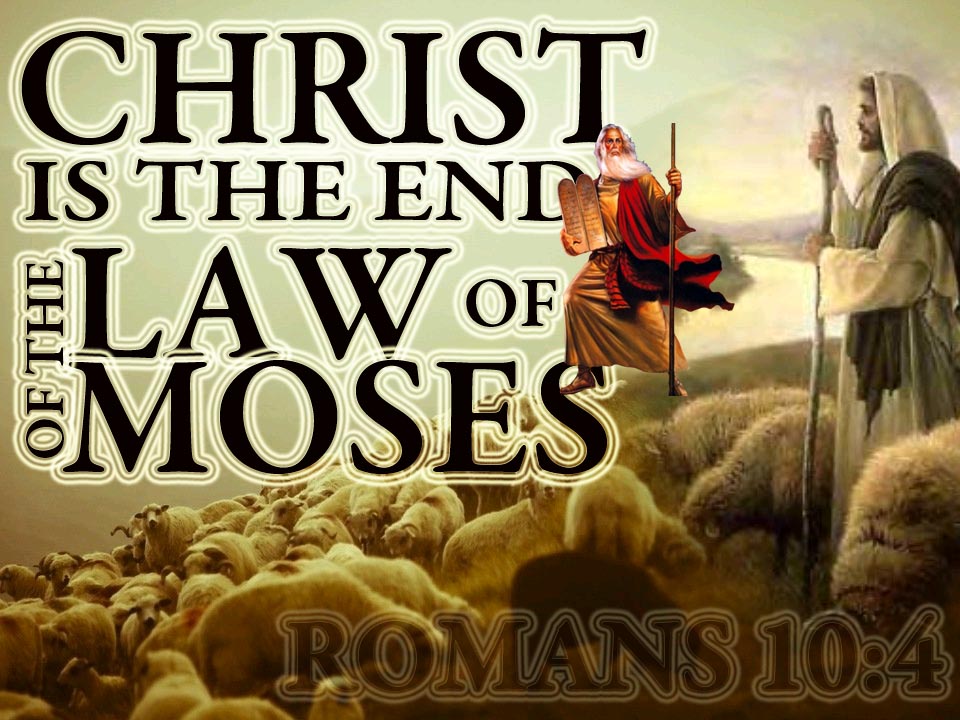
Eternal Life and the Mosaic Covenant

Was the Mosaic Covenant only concerned about temporal blessings? Was living long and peaceful lives in a land filled with milk and honey the ultimate reward for obeying the Law of Moses? Or was eternal life the ultimate promise of the Mosaic Covenant.

New Covenant Theology (NCT) views the Law of Moses as a code of morality that only demanded external obedience. Some NCT proponents have even sought to explain away the tenth commandment (thou shalt not covet) as a command not to steal. Regardless, for NCT, the Mosaic Covenant was merely an external covenant that promised external blessings to an external people. In some ways, NCT looks at the Mosaic Covenant and the nation of Israel in the same way Dispensationalists look at the New Covenant and the church—parenthetical to God’s overall redemptive plan.

I, on the other hand, believe that the Mosaic Covenant was more than just a parenthetical and typological covenant that was given to foreshadow New Covenant realities. In addition to that, I believe that the Mosaic Covenant was designed for Christ Jesus to fulfill in order to establish eternal life for all who believe. In other words, for national Israel, the Mosaic Covenant was typological and provided only temporal and physical blessings, but for Christ (the true Israel of God), who fulfilled the Mosaic Covenant, it brought eternal and spiritual blessings (i.e., eternal life). In other words, the Mosaic Covenant of works was necessary because the New Covenant of grace was born out of its fulfillment.

With this in mind, there are at least nine reasons why I believe that the Mosaic Covenant promised eternal life.        

1. The Promises of Mosaic Covenant Flowed Out of the Promises of the Abrahamic Covenant

To say that the Mosaic Covenant only promised physical and temporal blessings is to say that the Abrahamic Covenant only promised physical and temporal blessings. This is because the promises of the Mosaic Covenant are one and the same as the promises given to Abraham. “I will be your God, and you shall be my people” was the ultimate goal of both the Abrahamic and the Mosaic Covenant. And yes, these spiritual promises were conditional under both the Abrahamic and Mosaic Covenant, but to say that the Mosaic Covenant did not promises spiritual and eternal promises is to say that the Abrahamic Covenant did not flow out of the Abrahamic Covenant.  

2. Moses Taught that Eternal Life was Promised in the Mosaic Covenant  

According to Moses, the reward for obedience was not merely a prosperous temporal life but eternal life: “You shall therefore keep my statutes and my rules; if a person does them, he shall live by them” (Lev. 18:5). This is due to the fact that the curses of the Old Covenant not only threatened Israel with expulsion from the promised land but also ultimately, threatened the physical seed of Abraham with being “cut off” from God. For it is written, “the curses written in this book will settle upon him, and the Lord will blot out his name from under heaven” (Deut. 29:20). For the land of promise was to be more than a geographical plot of land for the children of Israel to inhabit, but more importantly it was to be the place where God’s presence would dwell with man. Therefore, to be cut off and expelled from the land implied the greater danger of being cut off and exiled from God.

3. Paul Taught that Eternal Life was Promised in the Mosaic Covenant  

The Apostle Paul understood that Moses was speaking of eternal life when he compared and contrasted the Mosaic Covenant with the New Covenant: “For Moses writes about the righteousness that is based on the law, that the person who does the commandments shall live by them. But the righteousness based on faith says...For with the heart one believes and is justified, and with the mouth one confesses and is saved” (Rom. 10:5, 10). In other words, Paul is not making a distinction between the “life” that was promised in the Mosaic Covenant from the “life” that is promised in the New Covenant. Rather, Paul is contrasting how “life” was to be obtained in the Mosaic Covenant from how “life” is obtained in the New Covenant, which is a distinction between the works of the law and faith in Christ Jesus. For as Paul says in another place: “But law is not of faith, rather ‘The one who does them shall live by them’” (Gal. 3:12).

4. Christ Taught that Eternal Life was Promised in the Mosaic Covenant  

Moreover, when a certain person came up to Christ asking “what good deed must I do to have eternal life?” The Lord responded by saying, “If you would enter life, keep the commandments” (Matt. 19:16-18).[1] For even the Lord Jesus affirmed that it was not merely a long physical life but eternal life that the Law of Moses promised to those who loved God with all their hearts and loved their neighbor as themselves (Luke 10:25-29). Which conversely affirms that eternal death awaits all those who fail to love God in the slightest with all their hearts, minds, strength and souls. Calvin was right when he claimed, “It is quite certain that the primary promises, which contained that covenant ratified with the Israelites by God under the Old Testament, were spiritual and referred to eternal life.”[2]

5. If the Law was Spiritual, then the Promises Must Have Been Spiritual (i.e., Promising Eternal Life)

Moreover, because the Mosaic Covenant was a republication of the moral law of God, it by necessity promised eternal life for all who perfectly obeyed God. Unless the Law of Moses was something less than the perfect moral law of God, then it held out eternal life for those who kept it and eternal death for those who did not. Thus, Samuel Petto (1624-1711) concluded:

Now the Sinai covenant is a platform of the legal righteousness which was indispensably necessary unto life; there it is deciphered, delineated, and described, more clearly than in any other federal expressure. The Sinai covenant excels all other, in discovering what that righteousness is, upon which we enjoy eternal life.[3]

Again, NCT teaches that the Law of Moses merely demanded external obedience, and thus it would make
sense that external obedience cannot offer spiritual life. But, if the Law of Moses is spiritual (the perfect
moral law of God), then eternal life and death must be its ultimate blessing and curse.

6. Removes Christ from the Adamic Covenant of Works

And it is important to note that the covenant of works that God established in the Abrahamic and Mosaic Covenants is same as the covenant of works that was established with Adam, for it consisted of the same moral law with the same blessings and curses. Eschatological life and death were at the heart of both. As Edward Fisher writes, “the law delivered on Mount Sinai, and formerly engraven on man’s heart, was one and the same; so that at Mount Sinai the Lord delivered no new thing.”[4] Therefore, these two covenants of works are one and the same, but were issued with two different federal heads. This safely removes Christ from the membership of the broken Adamic Covenant of works, while placing Him in the revised covenant of works that was established in the Abrahamic and Mosaic Covenants.

Consequently, the federal head of the Adamic Covenant of works is Adam who brought death upon all humanity, while the federal head of the Abrahamic/Mosaic Covenant of works is Christ Jesus who thankfully brings life to all who are united to Him by faith. Thus, we are condemned in Adam who broke the first covenant of works but justified in Christ who fulfilled the second covenant of works. But again, the same moral law that was broken by the first Adam was the moral law that was satisfied by the second Adam (Rom. 5:12-21).

This also means that the Adamic Covenant of works is still currently holding Adam’s natural seed captive to the curses of the law (i.e., death), while the Abrahamic/Mosaic Covenant of works has been satisfied for all of Abraham’s spiritual seed who are heirs to the blessings of the law (i.e., life). In short, the first covenant of works (made with the first Adam) remains broken, while the second covenant of works (made with the second Adam) is fulfilled. Consequently, a person is either in union with the first Adam or in union with the second Adam. And depending upon which union that is, depends if that person is under law or under grace.

And just because it was impossible for the physical seed of Abraham to fulfill such a strict and demanding covenant did not mean that its promises and curses were nullified.[5] For their responsibility to obey was not contingent upon their ability to obey. This may seem unfair, but the moral law by its very nature cannot be anything but fair. And this is why the Mosaic Covenant was an administration unto death rather than unto life, for by the works of the law no flesh shall be justified.

Nevertheless, for this reason, the Mosaic Covenant was not hypothetical. The covenant of works condemns all those who are not found righteous in the sight of God’s moral law. Hell is proof that the terms of the covenant of works are unchangeable. The Cross of Calvary is proof that the covenant was not hypothetical.

For the blessings of the law to be established, then the physical seed of Abraham (i.e., Christ) had to fulfill the demands and the curses of the law. For God to be both just and merciful there is simply no way around this. Thus, for sinners, the law was given to awaken them to their own sinfulness and administer death, but for the righteous (i.e., Christ) it was given to establish life.

7. Christ Fulfilled the Law of Moses

Christ fulfilled is the moral law of God in His life and death. And if the Law of Moses is the moral law of God, then Christ fulfilled it. When the Bible speaks of Christ obeying the law, it is speaking primarily of the Law of Moses and not to the law of creation (which, nevertheless, I believe, that they are the same).

·          Matt. 5:17-19 Do not think that I have come to abolish the Law or the Prophets; I have not come to abolish them but to fulfill them. For truly, I say to you, until heaven and earth pass away, not an iota, not a dot, will pass from the Law until all is accomplished.
·
·   Gal 3:10-14 For all who rely on works of the law are under a curse; for it is written, "Cursed be everyone who does not abide by all things written in the Book of the Law, and do them." Now it is evident that no one is justified before God by the law, for "The righteous shall live by faith."   But the law is not of faith, rather "The one who does them shall live by them." Christ redeemed us from the curse of the law by becoming a curse for us—for it is written, "Cursed is everyone who is hanged on a tree"— so that in Christ Jesus the blessing of Abraham might come to the Gentiles, so that we might receive the promised Spirit through faith. 

Galatians 3:10-14 speaks of Christ fulfilling the Law of Moses in order to bring the spiritual blessings of Abraham to all who believe. For this reason alone, the Mosaic Covenant must have promised more than just temporal and physical blessings.

8. The promises in the Mosaic Covenant spoke of Eternal Realities  

Although the Mosaic Covenant was merely typological in the Old Testament dispensation, the promises spoke of eternal realities. For instance, take this quote by G. K. Beale:

…after promising that God would restore Israel and ‘multiply men’, and make them ‘increase and be fruitful’ (Ez. 36:10-11), he also promises a ‘multiplications’ of fruitfulness (36:29-30), so that Israel’s formerly desolated land will ‘become like the garden of Eden’ in which God ‘will increase their men like a flock’ (cf. 36:35-38). Then, in direct development of these preceding ideas and of Leviticus 26:6-12 (!), Ezekiel 37:26-28 again refers to that aspect of the promise of ‘multiplying them’ and ties it to Israel’s temple: ‘It will be an everlasting covenant…And I will…multiply them, and will set My sanctuary in their misdst forever. My dwelling place [or ‘tabernacle’] also will be over them; and I will be their God, and they will be My people. And the nations will know that I am the Lord who sanctifies Israel, when My sanctuary is in their midst forever.’[6]

Were these promises physical or spiritual? I would say they were both physical and spiritual. Of course, because of Israel’s failure to obey, the nation of Israel did not enter into the fulfillment of these promises, but regardless these promises pointed to the new heavens and the new earth where they would be ultimately fulfilled. And if this is the case, then the promises given in the Mosaic Covenant, although not fulfilled in the Old Testament dispensation, looked to the greater and eternal realities to come. For what national Israel was unable to bring about, we see Christ, the true Israel of God, establishing.

9. The Deficiency of Mosaic Covenant was not that It Promised only Temporal Blessings but that It was Unable to Establish the Spiritual Promises  

When the Scripture speaks of the Mosaic Covenant as being physical and the New Covenant as being spiritual, this does not mean that the Old Covenant was unconcerned about spiritual realities (e.g., circumcised heart, eternal life) or that the New Covenant is unconcerned about physical realities (e.g., a new earth, a resurrected body, etc…). Rather, the difference between the Old and New Covenants is that they approach the physical and spiritual concerns of the Abrahamic Covenant from two different directions or starting points.

For instance, the Old Covenant was ineffectual because it sought to reform the inner man by external means. For instance, the Mosaic Covenant started by issuing outward circumcision but afterwards it demanded inward circumcision. Moreover, once the Old Covenant law was etched in stone, it required inward obedience from the heart. Moreover, though the physical children of Abraham were given a physical land and established in a physical kingdom, they would not fulfill their ultimate purpose until they filled the land of promise (i.e., the earth) with the presence, knowledge, and glory of God as the spiritual and holy people of God. Yet, because the Old Covenant started from the outside, it remained ineffectual in establishing for its unregenerate membership the spiritual promise of the Abrahamic Covenant. For no matter how hard one tries, outward legislation (regardless of the purity of the laws) can never change sinful and depraved hearts.

On the other hand, the New Covenant is effectual in securing the physical promises of the Abrahamic Covenant because it starts not with the physical but with the spiritual realities first. For example, a circumcised heart precedes water baptism, and spiritual regeneration goes before outward obedience of the law. Moreover, before the saints inherit the world at the end of the age, they must be born again into a spiritual kingdom in the present age. The New Covenant will bring about universal peace, prosperity, and a new heavens and a new earth where only righteousness dwells, but only because it starts by calling out a spiritual people unto a heavenly kingdom in the midst of this fallen world first.

Therefore, in this sense, the promises of the Old and New Covenant are the same, but they have two different means in which they seek to accomplish their end objectives. As it were, the Old Covenant, by the works of the law, sought to enter the house of God through the back door, which always remains locked for the sinner. By grace, on the other hand, the New Covenant has opened the front door of the house of God for the believer through the finished work of Christ Jesus. For Christ went through the back door by obedience of the law so that he could open the front door for all who enter by faith.

For this reason, the New Covenant is superior to the Old Covenant. In that, unlike the Old Covenant, the grace of the New Covenant has the power to save sinners and usher believers into the presence of God because it begins by effectually changing their hearts.

Nevertheless, though God redeems the soul before He redeems the body, God revealed the law of the Old Covenant before He revealed the grace of the New Covenant. In other words, though the spiritual kingdom of this age comes before the creation of the new heavens and the new earth in the age to come, the spiritual kingdom of this age was foreshadowed by the physical kingdom of Israel in the previous age.

In the order of salvation, the spiritual comes before the physical, but in the order of revelation, the physical is revealed before the spiritual.


The Order of Revelation
Physical, then Spiritual
The Old Covenant, then the New Covenant
Law, then Grace
Do this, then Live
Ishmael, then Isaac
Animal Sacrifices, then Christ
Israel, then the Church

The Order of Salvation
Spiritual, then Physical
New Heart, then Obedience
Grace, then Works
Live, then do this
Redemption of the Soul, then Glorification of the Body
The Spiritual Kingdom, then the New Earth

Thus, in regards to the order of divine revelation, the ineffectual and physical realities of the Old Covenant, which were revealed first, were only shadows and types of the effectual and spiritual realities of the New Covenant, which were revealed afterwards. “For…the law has but a shadow of the good things to come instead of the true form of these realities” (Heb. 10:1).

But this only stands to reason. Because the Old Covenant could not fulfill the spiritual promises of the Abrahamic Covenant, even the physical promises of the Abrahamic Covenant were never fully fulfilled either. The physical seed, land, kingdom, and temple may have come first and looked like the real thing, but because of their inability to produce the inward and spiritual promises, they were merely pictures or empty and typological shadows of the spiritual and physical realities, which were to be established afterwards by the New Covenant. To put it more plainly, though the Mosaic Covenant promised eternal life it could not provide eternal life for the sinner, therefore the Mosaic Covenant at best was a temporal and typological covenant that pointed to the spiritual and eternal realities that would afterwards be established in the New Covenant.


For this reason, the Old Covenant was not only ineffectual in establishing the promises of Abraham, it was a temporal covenant that was not designed to last forever. The ineffectual shadows of the Old Covenant where to continue until the effectual and eternal realities of the New Covenant were establishment in Christ Jesus and then they were to pass away.

Conclusion

For fallen Israel, the Mosaic Covenant was unable to establish the spiritual and eternal promises of the Abrahamic Covenant. For them, the Law of Moses, was design to condemn them. But what Israel failed to do (due to the weakness of their sinful flesh), Christ, the physical child of Abraham (who was born under the Law of Moses), did. In this since the Law of Moses was not designed to condemn but to justify Christ. In a word, because of the fallen nature of the children of Abraham in the Old Testament dispensation, the Mosaic Covenant was merely typological and dealt with only temporal blessings, but because of Christ stratification of the Mosaic Covenant, the New Covenant users in the spiritual and eternal blessings that were promised in both the Abrahamic and the Mosaic Covenants.


[1] Italics mine.
[2] John Calvin, Institutes of the Christian Religion. Edited by John T. McNeill. Translated by Ford Lewis Battles. The Library of Christian Classics (Philadelphia: Westminster Press, 1977), 4.16.11.
[3] Samuel Petto, The Great Mystery of the Covenant of Grace (Stoke-on-Trent, UK: Tentmaker Publishers), 129. Italics mine.
[4] Edward Fisher, The Morrow of Modern Divinity (Ross-shire, UK: Christian Focus, 2009), 80.
[5] According to Edward Fisher, the inability to obey the Mosaic Covenant did not make the covenant unjust: “[F]or the Lord may justly require perfect obedience at all men’s hands, by virtue of that covenant which was made with them in Adam; and if any man could yield perfect obedience to the law, both in doing and suffering, he should have eternal life; for we may not deny (says Calvin) but that the reward of eternal salvation belongeth to the upright obedience of the law” (The Morrow of Modern Divinity, 85).
[6] G. K. Beale, The Temple and the Church’s Mission, 111

Tuesday, February 26, 2008

"What is a Reformed Baptist?" Poll Results

Although I had planned to run the poll for an entire year, I have discovered that Blogger's poll feature began to lose votes after it passed 100. It seemed to work fine, in fact, until it got up to 114 votes, after which votes began to disappear and the number began to fluctuate up and down. Since I or my wife checked it every day, we are certain that the last update was accurate (at that time consisting of 109 votes), but cannot be certain of the exact figures after that date.

So, I am closing the poll and listing the results after running it for approximately six months.

Well over half of those responding (62%) did not think strict adherence to the Baptist Confession of 1689 is necessary to being a Reformed Baptist. Here is the breakdown of the poll as the Blogger poll feature listed it on January 17:
20% thought that one only had to be a Baptist who held to Calvinistic soteriology.

34% thought that one must be a Baptist who holds to Calvinism and Covenant Theology.

38% thought that one must be a Baptist who holds to the 1689 Confession.

6% thought that one must hold to the 1689 Confession for the most part, but thought that this should not have to include adherence to the Sabbath requirement.
You may have noticed that the figures actually add up to a total of 98% rather than 100%, but this appears to be due to Blogger's having rounded numbers up or down rather than having given more precise results. So these numbers will have to do. But they reflect pretty well what the trend was for the poll as I watched it over a six month period, with roughly 60% of the votes consistently falling into one of the categories that does not regard strict adherence to the Baptist Confession of 1689 as necessary to regard oneself a Reformed Baptist.

The two most common responses ran roughly neck and neck over the six months of the poll. The predominant response was that a Reformed Baptist is one who holds to the 1689 Confession (38%), with a pretty close second being that a Reformed Baptist must at least hold to Calvinism and Covenant Theology (34%). Together these constitute a significant majority of those who responded (72%).

This result really doesn't surprise me given my own experience in Reformed Baptist circles. I am not surprised that most thought that a Covenantal perspective was necessary, thus ruling out those Calvinist Baptists who are Dispensational. Nor am I surprised that, among those who would define the term Reformed Baptist more narrowly, there was a pretty even split among those who did not see a close adherence to the Baptist Confession of 1689 as necessary. This of course reflects the historical fact that not all of those who have called themselves Reformed over the centuries would necessarily adhere to the English confessions written in the 17th century. For example, there are many Reformed of a Presbyterian stripe that would not adhere to the Westminster Confession of Faith (the many Dutch Reformed and those springing more directly from this background come to mind). So it should not be surprising that many Reformed Baptists should similarly regard the 1689 Confession, which so closely reflects the Westminster standard, as being too narrow a definition of the term Reformed as applied to them.

In other words, the poll results for the most part are well within the limits of what one should expect, at least if one has a fair knowledge of Reformed history as well as the modern development of what has become the Reformed Baptist movement. The former indicates more flexibility in the use of the term Reformed than with reference strictly to the Westminster tradition, and the latter indicates more flexibility in the use of the term Reformed Baptist than with reference strictly to the 1689 Confession.

With regard to the modern term Reformed Baptist, Jim Savastio has summarized well the (sometimes frustrating) diversity of its usage. Here are his remarks from a paper entitled What is a Reformed Baptist Church?:
The answer to the question, “What is a Reformed Baptist church?” is difficult for two reasons. In the first place, it is difficult to answer because the terms Reformed and Baptists are often seen to be at odds with one another. Many theologians, both Reformed and Baptist, would say that such a title is a misnomer. Some claim that it is not possible to be both Reformed and baptistic! Though Baptists have been and can be Calvinistic, it is said, they are not and cannot be Reformed. The reason for this charge is simple: Reformed theology is almost always associated with paedo-baptism (infant sprinkling). Many who are Reformed in their theology view this perspective as the sine qua non of the Reformed Faith.

Secondly, the subject is difficult because there exists an ever-widening gulf between churches that call themselves Reformed Baptists. The term has not been copyrighted and, thus, there exists no definitive statement regarding who can lay claim to the title. You will find that no two Reformed Baptist churches walk in lock-step. Some churches call themselves “Reformed Baptists” when all they mean by that is that they hold to the so-called "Five points of Calvinism" and that they immerse believers. Other “Reformed Baptists” hold to the Second London Baptist Confession of Faith of 1689 in its entirety, while yet a third group of “Reformed Baptists” hold to but a few of the articles. And although most Reformed Baptists hold to a Biblical and Puritan view of the Lord’s Day Sabbath, there are some who reject the doctrine as legalistic. In addition, Reformed Baptists churches differ in regard to their understanding of the exact application of the Regulative Principle of worship (the conviction that the Bible alone dictates the worship and life of the church), in regard to who is invited to the Lord’s table, to Bible translations, hymnals, the structure of prayer meetings, ministerial training, the nature of the pastoral office, denominations, and associations, etc., etc. [Note: The copy of the paper linked above is from the site of The Reformed Baptist Church of Louisville, where Jim Savastio is a pastor, but there is also a copy at the website of Phoenix Reformed Baptist Church.]
As I see it, there has been a movement under way for some time among many Baptists to get back to their Biblical - i.e. Calvinistic - roots. This seems to have been going on for about thirty years at least. During this time, there have obviously been many for whom the term Reformed Baptist quite naturally suggested itself as a good description of their views. For example, I have a recollection of the way I and a few of my friends at Columbia Bible College began to call ourselves Reformed Baptists about eighteen or twenty years ago, and we actually thought we were coining the term. I have since discovered that there were others using the term even before that time.

The term thus arose with varied connotations among a variety of people and churches, who until recently were relatively unaware of each other's existence. But, especially since the advent of the internet and its increasingly common usage, these men and groups have begun to find one another and to discover both what they share in common and where they differ. As the smoke clears, however, there seems to be a pretty strong majority who would think that a Reformed Baptist must at a minimum hold to a Calvinistic and Covenantal perspective. At least this is what both my experience and the poll results would seem to indicate.

As always, I welcome comments from the blog's readers.