Tuesday, October 29, 2013

Army Briefing Labels Christians and Tea Party Members as Terror Threats?

Yesterday Todd Starnes posted a disturbing article at Townhall.com entitled Army Briefing Labels Tea Party, Christians as Terror Threats. Here is the first portion of the article outlining the charge:
Soldiers attending a pre-deployment briefing at Fort Hood say they were told that evangelical Christians and members of the Tea Party were a threat to the nation and that any soldier donating to those groups would be subjected to punishment under the Uniform Code of Military Justice.
A soldier who attended the Oct. 17th briefing told me the counter-intelligence agent in charge of the meeting spent nearly a half hour discussing how evangelical Christians and groups like the American Family Association were “tearing the country apart.” 
Michael Berry, an attorney with the Liberty Institute, is advising the soldier and has launched an investigation into the incident. 
“The American public should be outraged that the U.S. Army is teaching our troops that evangelical Christians and Tea Party members are enemies of America, and that they can be punished for supporting or participating in those groups,” said Berry, a former Marine Corps JAG officer.
“These statements about evangelicals being domestic enemies are a serious charge.”
The soldier told me he fears reprisals and asked not to be identified. He said there was a blanket statement that donating to any groups that were considered a threat to the military and government was punishable under military regulations. 
“My first concern was if I was going to be in trouble going to church,” the evangelical Christian soldier told me. “Can I tithe? Can I donate to Christian charities? What if I donate to a politician who is a part of the Tea Party movement?” 
Another soldier who attended the briefing alerted the Chaplain Alliance for Religious Liberty. That individual’s recollections of the briefing matched the soldier who reached out to me. 
“I was very shocked and couldn't believe what I was hearing,” the soldier said. “I felt like my religious liberties, that I risk my life and sacrifice time away from family to fight for, were being taken away.”
One can only hope that these allegations turn out to be unfounded, although I doubt they will be given the current trend in the U.S. military under the Obama Administration.

Thursday, October 24, 2013

An Interesting Open Letter to Mark Driscoll

On Monday Darren Wiebe, a graduate of Moody Bible Institute and a current M.Div. student at The Master’s Seminary, posted My Open Letter to Mark Driscoll. In it he publicly confronted Mark Driscoll for having lied concerning what actually took place when Driscoll showed up at the Strange Fire Conference with James MacDonald to pass out copies of one of his books in the parking lot.

Darren was attending the conference and spoke with Driscoll in the parking lot and witnessed what actually took place when Driscoll was asked to leave by security. Here is the heart of Darren's post, which contains the charge against Driscoll:
Instead, by your own admission, you were met graciously by the Grace Community Church staff and security. You told the Christian Post that you thought it was “Gracious that they let me on campus at all.” Adding that, “they don’t owe me anything and I didn’t go through an official process. I wasn’t planning on it. I just happened to be in town.” Pastor Mark, this statement tells me two things:
    1. You were looking to pick a fight. By your own words you claim that you did not expect to have a good meeting when you arrived on campus. You came to cause a scene and maybe gain some status as a martyr in the promotion of your upcoming book, in which you ironically call for unity within the church and a ceasefire on what you’ve labeled as “tribalism.” Honestly, if your arrival had gone according to how you envisioned and anticipated, it would have been a perfect illustration. I have to wonder though, were you were seeking to start a civil war for promotional reasons?
    2. You schemed. Be honest Pastor Mark, you did not happen to be in town. You were in Long Beach… A trip of over 40 miles on one of America’s most congested freeways. You did not just happen to be in the neighborhood with a reporter and photographer. The only time I see scheming in the scriptures, it does not have positive connotations. Those that are associated with scheming are not ones with which we want to be aligning ourselves. But again, this is my interpretation of what was going on. Please correct me if I’m wrong. Maybe you always have a reporter and photographer with you.
So many people have asked me about the few minutes that we talked. I tell them about how nice you were…very cordial and gracious. It was a pleasant exchange about church planting, ministry and the last time you were in my homeland of Canada. While you were here, it was rather nice. There’s plenty that we do not agree upon, but that does not mean we have to throw away civility. When it was time for you to leave, I watched some of the staff of Grace Community Church walk back with you to your car, even offering to carry the box of books you brought. The box of books you returned to them, insisting they were a gift.  And I heard friendly conversation and even joking banter between you and the head of security.
Honestly, I and many others were impressed by how well you conducted yourself on campus, even though it seemed like you were pulling a Kanye West inspired move. That is why I was so shocked, when you drove off campus and immediately sent out this tweet:
Darren goes on to say:
I still am shocked at seeing my picture float around Facebook and the various Christian news outlets. I never realized my 15 minutes of fame would come with so much baggage attached. In all honesty, I walk away unscathed. I just have to put up with getting teased by friends and family over the fact that they’re seeing me everywhere online. However, I was not the brunt of a lie and I do hurt for my dear friend who you falsely accused in a public arena and presented in a way that is far from accurate. I cannot understand how you feel justified in presenting someone who was gracious to you, someone who offered to help you carry things, someone who treated you like a gentleman…as a villain. You threw this man under a bus as he was carrying your things.
Thankfully, his upright character is so well-known to those at Grace Community Church that most people were surprised to see him portrayed as such. This is a real man, one who acts like a man. He’s strong, noble and does his job as head of security with excellence. I have also watched him on numerous occasions, share the gospel passionately with those he is having to contain and discipline. I’ve seen him pleading with those he is working with, inviting them to come to church with him. More concerned for their souls, than for the harm they may inflict on the campus. Please, you have an opportunity to clear his name.
This is a pretty serious charge, but it certainly looks like a valid one from an eyewitness who clearly was not alone in what he observed.

For another interesting take on the actions of both Mark Driscoll and James MacDonald in showing up unannounced and uninvited to the Strange Fire Conference, Darren recommends this post.

Update 24 October 2013

Thanks to Marcia Wilwerding for posting a link to this video in the comments below:


That pretty much says it all.

Update 25 October 2013

In all fairness Mark Driscoll has responded to the above accusation in a post entitled See you in Seattle, Pastor John MacArthur? Here is the relevant portion:
The only difficult moments on my visit came during my interactions not with your pastoral staff, but with a few of the apparently staff security personnel. I had been handing out advance copies of my new book for free; the pastoral staff said I was welcome on campus. They were kind, and some of them even asked for photos and books, which I gave them and signed with a pen I borrowed from your son, Mark. He kindly lent it to me, we visited, and he too was very kind, very welcoming, and very gracious.However, there were two security guards who seemed to operate in a manner inconsistent with the permission I received from the pastoral staff. These two men took turns approaching me as I was talking with and praying for people, and things got confusing.
Security said I could not hand the books out, so I stopped. But people started helping themselves to the books that remained in the box, so security said the books had to be removed. One of the security guards said if I did not remove the books, he would “have to take it to the next level.” I asked him what that meant, curious, as his tone was different than the pastoral staff I had encountered. He admitted he did not know what the next level was. The other security guard then approached, saying the books had to be removed. He told me that they were taking them to put them in a Mustang, which they apparently thought was my vehicle. I did not know what Mustang they were referring to. In any case, it was obvious that my gift books were being removed.
It was at this point that I told the security guard that, since they were going to confiscate the books anyway, they could just keep them as a gift from me. Apparently, someone recorded the final words of this conversation on video, but nothing of the prior conversations that led up to it.
As Bible teachers, we both know that people often arrive at the wrong conclusion when they extract a line out of an ongoing discussion, ignoring the context, and then wrongly impugn someone’s character. I am guessing the security team and pastoral team were not entirely rowing in the same direction, and that security thought they were just doing their job.
This sounds reasonable at first glance, but then I again read Darren's eyewitness account and again watch the video footage, and it looks very clear to me that the security staff were not trying to "confiscate" Driscoll's books at all but were merely seeking to remove them in order to keep them from being handed out. And it was Driscoll himself who repeatedly insisted that they keep the books a as gift to the church. Why the repeated insistence unless he thought it wasn't their intention to keep the books? If Driscoll actually thought they were trying to confiscate the books, then why would there have been a need to repeatedly insist that they keep them? One only repeatedly insists that someone keep something as a gift if the person seems reluctant in some way to keep it, right? It just doesn't look good, does it?

Wednesday, October 16, 2013

Reminder - The Christmas Giveaway is Coming!

This is just a reminder to the blog's readers that, as I announced on September 23, this year the Reformed Baptist Blog would like to thank our readers by offering an opportunity to two of the blog's email subscribers to receive a free book for Christmas this year. Two of our readers will receive a free copy of Dr. Jeff Johnson's upcoming book The Kingdom of God: A Baptist Expression of Biblical and Covenant Theology when it becomes available, which we hope will be this December. We will keep you posted and let you know just as soon as possible. This book promises to be perhaps the definitive work to date on Covenant Theology from a Reformed Baptist perspective. You can read more about this publication here.

On December 15 I will draw from the addresses included in the email subscriber list from FeedBurner. So, if you want to have a chance to receive one of these books, then make sure you sign up as an email subscriber to the blog using the Subscribe in a reader link on the right panel of this page. And make sure you click the "Get Reformed Baptist Blog delivered by email" option. Current email subscribers are already in the running.

Tuesday, October 08, 2013

Parable of the Wise and Foolish Builders (Matthew 7:24-27 Teaching Outline)

Introduction: The Sermon on the Mount, like most sermons today, has both an introduction and a conclusion. The introduction consists of the thought-provoking and heart-penetrating Beatitudes, but the conclusion consists of a simple illustration intended to drive home the crucial choice left to the hearers. And it shows us that we have been brought by Jesus to a potentially dangerous place as well. For we have become hearers of His teaching and – as hearers – we are now held responsible for what we have heard.

Puritan author Thomas Brooks, in his justly famous book entitled Precious Remedies Against Satan's Devices, gives this warning in his preface “To the Reader”:
Know that it is not the knowing, nor the talking, nor the reading man – but the doing man, that at last will be found the happiest man. “If you know these things, blessed and happy are you if you DO them.” “Not everyone that says, Lord, Lord, shall enter into the kingdom of heaven – but he who DOES the will of my Father that is in heaven” (John 13:17, Matt. 7:21). Judas called Christ Lord, Lord; and yet betrayed him, and has gone to his place. Ah! how many Judases have we in these days, that kiss Christ, and yet betray Christ; that in their words profess him—but in their works deny him; that bow their knee to him, and yet in their hearts despise him; that call him Jesus, and yet will not obey him for their Lord.
Reader, if it is not strong upon your heart to practice what you read, to what end do you read? To increase your own condemnation? If your light and knowledge be not turned into practice, the more knowing a man you are, the more miserable a man you will be in the day of recompense; your light and knowledge will more torment you than all the devils in hell. Your knowledge will be that rod that will eternally lash you, and that scorpion that will forever bite you, and that worm that will everlastingly gnaw you; therefore read, and labor to know, that you may do – or else you are undone forever. 
Exposition – The Wise Builder: We will see in this passage that Jesus also gives us a grave warning, although – unlike Brooks – He chooses to end His discourse with a warning. And His warning comes in the form of a brief but poignant parable.
NKJ  Matthew 7:24-25 Therefore whoever hears these sayings of Mine, and does them, I will liken him to a wise man who built his house on the rock: 25 and the rain descended, the floods came, and the winds blew and beat on that house; and it did not fall, for it was founded on the rock.
The word therefore points back in the context to the previous contrast between saying and doing and introduces the contrast here between hearing and doing. Just before and leading up to this parable, Jesus said:
NKJ  Matthew 7:20-23 Therefore by their fruits you will know them. 21 Not everyone who says to Me, “Lord, Lord,” shall enter the kingdom of heaven, but he who does the will of My Father in heaven. 22 Many will say to Me in that day, “Lord, Lord, have we not prophesied in Your name, cast out demons in Your name, and done many wonders in Your name?” 23 And then I will declare to them, “I never knew you; depart from Me, you who practice lawlessness!”
In these preceding instructions Jesus warned us about the danger of self-deception that makes us think that we can claim to believe yet have no corresponding fruit in our lives. Even so, in this parable Jesus is explaining that those who merely say that Jesus is Lord are self-deceived, but not due to the fact that they never heard the truth. They heard it alright, but it made no difference to them because they did not heed it!

When Jesus says that the man built his house on the rock and that his house was founded on the rock, He is implying and expecting His hearers to understand what He stated explicitly on another occasion when He used the same illustration:
NKJ  Luke 6:48 He is like a man building a house, who dug deep and laid the foundation on the rock. And when the flood arose, the stream beat vehemently against that house, and could not shake it, for it was founded on the rock.
So, when Jesus says the man built on the rock and that His house was founded on the rock, He is talking about the strong foundation of the house. And this foundation is deep in the ground. It is not immediately visible, and its depth and strength are not evident until it is battered by a storm and withstands it.

But what is the rock Jesus is talking about? What does it represent? The answer is found in verse 24, in Jesus' reference to “these sayings [words] of Mine.” The rock – the sure foundation – is the truth He brings. And Jesus intends a correspondence here between His own words and His reference to “the will of My Father” in verse 21:
NKJ  Matthew 7:21 Not everyone who says to Me, 'Lord, Lord,' shall enter the kingdom of heaven, but he who does the will of My Father in heaven.
So, those who say Jesus is Lord and do the Father's will are also those who hear Jesus' word and do it. And the Father's will and Jesus' words are revealed and preserved for us in the Bible. It is in the Bible where we find the source of truth upon which we must build our lives. It is in the Bible where we find Christ revealed. Thus the Lord Jesus ultimately directs us to the Scriptures as our sure foundation.

Exposition – The Foolish Builder: But the foolish man will not heed the words of our Lord Jesus, as He goes on to make clear in the second part of the parable:
NKJ Matthew 7:26-27 But everyone who hears these sayings of Mine, and does not do them, will be like a foolish man who built his house on the sand: 27 and the rain descended, the floods came, and the winds blew and beat on that house; and it fell. And great was its fall.
Again, a comparison with Jesus' use of this illustration elsewhere shows with certainty that the problem with this house is its lack of a proper foundation:
NKJ  Luke 6:49 But he who heard and did nothing is like a man who built a house on the earth without a foundation, against which the stream beat vehemently; and immediately it fell. And the ruin of that house was great.
Such a house has not been built upon the truth and will be destroyed when the storms come. This is true of those who encounter life's storms without this proper foundation, but it is especially true of those who encounter the ultimate storm of God's judgment. They shall fall … and great shall be their fall!

Application: This leads us to the application of the parable, and I would suggest that there are at least four ways in which we may apply this parable to our own lives:

1) Notice that the foundation is hidden until the storm comes. In fact, the two houses may even look the same in every way, but when the storm comes it will reveal the foundation ... and the foundation is all the difference!

Now, Jesus is speaking in a general way here, so He may have a broad application of the analogy in mind. In this case, the storm probably stands for difficulties, trials, or temptations that will come upon those who profess faith in Christ. In fact, the context would indicate temptations to follow false teachers as one possibility. If taken in this general way, this reminds me of another analogy Jesus used when He told the parable of the four kinds of soil. He described the three bad kinds of soil this way:
NKJ  Matthew 13:19-23 When anyone hears the word of the kingdom, and does not understand it, then the wicked one comes and snatches away what was sown in his heart. This is he who received seed by the wayside. 20 But he who received the seed on stony places, this is he who hears the word and immediately receives it with joy; 21 yet he has no root in himself, but endures only for a while. For when tribulation or persecution arises because of the word, immediately he stumbles. 22 Now he who received seed among the thorns is he who hears the word, and the cares of this world and the deceitfulness of riches choke the word, and he becomes unfruitful.
When the storms of life hit you, what kind of soil do they reveal you to be? Or, to get back to the analogy in this passage, what kind of foundation do they reveal? When difficulties and temptations come our way, do we begin to collapse under the pressure, or do we withstand such storms?

2) Also, if understood in this more general way, it is important to notice that Christians are not spared from storms. They are only assured that they will withstand them because they have built their lives on a sure foundation. As the Lord Jesus taught on another occasion, “In the world you will have tribulation; but be of good cheer, I have overcome the world” (John 16:33). And when we withstand the storms of life in this world, the foundation upon which we have built will be evident to all.

3) But there is another, more specific application Jesus may be thinking about in this parable, namely that the ultimate storm we will all face is that of God's judgment. Certainly the future judgment is on Jesus' mind in this passage (recall again verses 21-23). If so, it is not unusual that He would envision the future judgment as a storm, because this is a familiar Old Testament analogy. For example:
NKJ  Ezekiel 13:9-14 My hand will be against the prophets who envision futility and who divine lies; they shall not be in the assembly of My people, nor be written in the record of the house of Israel, nor shall they enter into the land of Israel. Then you shall know that I am the Lord GOD. 10 Because, indeed, because they have seduced My people, saying, “Peace!” when there is no peace – and one builds a wall, and they plaster it with untempered mortar – 11 say to those who plaster it with untempered mortar, that it will fall. There will be flooding rain, and you, O great hailstones, shall fall; and a stormy wind shall tear it down. 12 Surely, when the wall has fallen, will it not be said to you, “Where is the mortar with which you plastered it?” 13 Therefore thus says the Lord GOD: “I will cause a stormy wind to break forth in My fury; and there shall be a flooding rain in My anger, and great hailstones in fury to consume it. 14 So I will break down the wall you have plastered with untempered mortar, and bring it down to the ground, so that its foundation will be uncovered; it will fall, and you shall be consumed in the midst of it. Then you shall know that I am the LORD.”
When the ultimate storm of God's judgment comes upon you, what kind of foundation will be revealed? Will your life be seen to be built upon Christ through faith?

[Perhaps see also 1 Corinthians 3:9-15 about the future judgment for believers. Some Christians will be left with nothing but a foundation!]

4) In addition, the storms of this life as well as the ultimate storm of God's judgment will – as we have seen in the preceding context – expose the self-deception of those who call Jesus “Lord,” but who do not do the Lord's will. In the same way, these storms will reveal the self-deception of those who hear His word and do not do it. The Apostle James also wrote about such self-deception:
NKJ  James 1:22-25 But be doers of the word, and not hearers only, deceiving yourselves. 23 For if anyone is a hearer of the word and not a doer, he is like a man observing his natural face in a mirror; 24 for he observes himself, goes away, and immediately forgets what kind of man he was. 25 But he who looks into the perfect law of liberty and continues in it, and is not a forgetful hearer but a doer of the work, this one will be blessed in what he does.
Jesus, and James after Him, are warning us about such storms ahead of time, so that we will be wise builders now and build our lives on the truth. And if it smarts … if it makes us uncomfortable … then perhaps we should each ask ourselves this question: Isn't it better to have our self-deception revealed now – even if by many terrible and difficult storms of life – than in the future judgment? After all, now is the time we can do something about it! There will be no second chance beyond this life. As the author of Hebrews says, “It is appointed unto men once to die, but after this the judgment” (Heb. 9:27).

Conclusion: As John Stott has aptly reminded us concerning this parable:
In applying this teaching to ourselves, we need to consider that the Bible is a dangerous book to read, and that the church is a dangerous society to join. For in reading the Bible we hear the words of Christ, and in joining the church we say we believe in Christ. As a result, we belong to the company described by Jesus as both hearing his teaching and calling him Lord. Our membership therefore lays upon us the serious responsibility of ensuring that what we know and what we say is translated into what we do. (The Message of the Sermon on the Mount, p. 210, emphasis mine.]
Paul said to the Corinthians:
NKJ  1 Corinthians 3:11 For no other foundation can anyone lay than that which is laid, which is Jesus Christ.
Is Christ the foundation of your life? If so, it will show in the way you live your life! It will show that you are trusting the Lord as the true builder of your house:
NKJ  Psalm 127:1a Unless the LORD builds the house, they labor in vain who build it ….
It is only by God's grace and through His power that we can build our lives on a solid foundation!

Monday, September 30, 2013

Check Out the Bible Design Blog


If you want a helpful cite that offers good reviews of and recommendations for quality Bibles, then you will want to check out the Bible Design Blog. This blog is all about how Bibles are designed and bound, as well as the materials used. Here is a brief description of the blog from its author J. Mark Bertrand:
Focus on one thing and do it well. That’s the philosophy behind Bible Design Blog. Here the focus is on the physical form of the Good Book. I discuss good design with an emphasis on reader-friendly formats, which means elegant layout, opaque paper, and sewn bindings that open flat. The Bible is more than a reference work. It’s meant to be read. Choices made by designers, printers, and bookbinders all influence readability––though their sway usually goes unremarked. 
Not here.
If you are planning to spend money on an expensive, quality bound Bible, then you will want to read some of the reviews here first.

Monday, September 23, 2013

Christmas Giveaway - The Kingdom of God: A Baptist Expression of Biblical & Covenant Theology

This year the Reformed Baptist Blog would like to thank our readers by offering an opportunity to two of the blog's email subscribers to receive a free book for Christmas this year. Two of our readers will receive a free copy of Dr. Jeff Johnson's upcoming book The Kingdom of God: A Baptist Expression of Biblical and Covenant Theology when it becomes available, which we hope will be this December. We will keep you posted and let you know just as soon as possible. This book promises to be perhaps the definitive work to date on Covenant Theology from a Reformed Baptist perspective. You can read more about this publication here.

On December 15 I will draw from the addresses included in the email subscriber list from FeedBurner. So, if you want to have a chance to receive on of these books, then make sure you sign up as an email subscriber to the blog using the Subscribe in a reader link on the right panel of this page. And make sure you click the "Get Reformed Baptist Blog delivered by email" option. Current email subscribers are already in the running.

Thursday, September 19, 2013

Jeff Johnson Interview Regarding The Fatal Flaw

In case some of our readers missed it, last month Brandon Adams (author of the Contrast blog) interviewed our own Jeff Johnson about his book The Fatal Flaw of the Theology Behind Infant Baptism. The interview was posted as a podcast in two parts at the Confessing Baptist website:
Part One
Part Two

You will want to listen to this intriguing discussion about the nature and importance of Reformed Baptist Covenant Theology with a man who is quickly becoming one of the leading Reformed Baptist theologians of our day.

Tuesday, September 17, 2013

"Can Evangelical Chaplains Serve God and Country?—The Crisis Arrives" by Al Mohler

Earlier today Al Mohler posted a blog article entitled Can Evangelical Chaplains Serve God and Country?—The Crisis Arrives. Here is the opening of the article:
Can chaplains committed to historic biblical Christianity serve in the United States military? That question, though inconceivable to our nation’s founders, is now front and center. And the answer to that question will answer another, even more important question: Can religious liberty survive under America’s new moral order?
The repeal of the military’s “Don’t Ask, Don’t Tell” policy, coupled with the Supreme Court’s ruling that the Defense of Marriage Act is unconstitutional, set the stage for this crisis. The full normalization of same-sex relationships within the U.S. military is part of the unprecedented moral revolution that is now reshaping American culture at virtually every level.
The crisis in the chaplaincy arrived with these developments. The presenting issue is clear: Can a chaplain committed to historic biblical Christianity remain in military service? Does the normalization of homosexuality require that all members of the military, including chaplains, join the moral revolution, even if doing so requires them to abandon their biblical convictions?
I highly recommend reading the rest of the article here. We need to pray for an open door for the Gospel in the U.S. military, and ask for God's guidance and protection for Christians who serve, whether as Chaplains or in some other capacity.

Monday, September 16, 2013

Check Out the 1689 Federalism Website

Discover the covenantal heritage
of the 2nd London Baptist Confession of Faith.
If you want to get a good introduction to Reformed Baptist theology, a good place to start is the 1689 Federalism website, which focuses on the Biblical basis for and the distinctiveness of Reformed Baptist Federalism, also known as Covenant Theology, as outlined in the the London Baptist Confession of Faith of 1689.

There you can watch a number of  helpful introductory videos that include:
An Introduction to 1689 Federalism
1689 Federalism Versus Westminster Federalism
1689 Federalism Versus Dispensationalism
1689 Federalism Versus New Covenant Theology and Progressive Covenantalism
1689 Federalism Versus 20th Century Reformed Baptists
The site also includes some helpful charts and a list of resources.

Friday, September 13, 2013

"What Is a Family Integrated Church?" by Shawn Mathis

Earlier this year Shawn Mathis, pastor of Providence Presbyterian Church (OPC), Denver, Colorado, wrote an article entitled What Is a Family Integrated Church? The article has a subheading that reads "Rejecting activities which separate children from parents," and this immediately lets the reader know about one of the core principles at the center of the Family Integrated Church Movement (FICM). The article begins this way:
Is your Christian education based upon evolutionary and secular thinking? It is if your church practices the usual age-segregated Sunday school according to a new church movement. 
The family-integrated church movement, primarily within the homeschooling community, is a self-conscious challenge to classic Christian nurture. It has already affected some Reformed churches. But what exactly is the movement and how does it measure up to the Word of God and church history?
Shawn seeks to answer this question in his critique of the FICM. And in my continuing endeavor to keep this blog's readers informed about the issues and debate surrounding the FICM, I recommend that you read Shawn's article in its entirety. As always, comments are welcomed here.

Tuesday, September 10, 2013

John MacArthur on the Silence of Evangelicals in Defense of the Holy Spirit


Although the blog's regular readers already know that I cannot agree with every point John makes when he criticizes his fellow Evangelicals in this area of doctrine (see here), I could not agree more with his assertions in this video.

Monday, September 09, 2013

Al Mohler on the Importance of Expository Preaching

Recently Al Mohler has written an excellent series of articles highlighting the importance of expository preaching. In this series he seeks to encourage Evangelicals to recover the centrality of expository preaching in their churches. Here are the links to all three articles:

Expository Preaching—The Antidote to Anemic Worship -- In this article Dr. Mohler rightly concludes that "The anemia of evangelical worship—all the music and energy aside—is directly attributable to the absence of genuine expository preaching. Such preaching would confront the congregation with nothing less than the living and active word of God. That confrontation will shape the congregation as the Holy Spirit accompanies the word, opens eyes, and applies that word to human hearts."

The Sheer Weightlessness of So Many Sermons—Why Expository Preaching Matters -- In this article Dr. Mohler offers this definition of expository preaching: "Expository preaching is that mode of Christian preaching that takes as its central purpose the presentation and application of the text of the Bible. All other issues and concerns are subordinated to the central task of presenting the biblical text. As the word of God, the text of Scripture has the right to establish both the substance and the structure of the sermon. Genuine exposition takes place when the preacher sets forth the meaning and message of the biblical text and makes clear how the word of God establishes the identity and worldview of the church as the people of God."

Preaching with Authority: Three Characteristics of Expository Preaching -- In this article Dr. Mohler argues that "Authentic expository preaching is marked by three distinct characteristics: authority, reverence, and centrality. Expository preaching is authoritative because it stands upon the very authority of the Bible as the word of God. Such preaching requires and reinforces a sense of reverent expectation on the part of God’s people. Finally, expository preaching demands the central place in Christian worship and is respected as the event through which the living God speaks to his people."

I highly recommend reading this series and then returning to the Scriptures to remember again what the Lord has to say about the importance of the faithful preaching of His Word. Perhaps a good starting point would be Paul's admonition to Timothy:
NKJ 2 Timothy 4:1-5 "I charge you therefore before God and the Lord Jesus Christ, who will judge the living and the dead at His appearing and His kingdom: 2 Preach the word! Be ready in season and out of season. Convince, rebuke, exhort, with all longsuffering and teaching. 3 For the time will come when they will not endure sound doctrine, but according to their own desires, because they have itching ears, they will heap up for themselves teachers; 4 and they will turn their ears away from the truth, and be turned aside to fables. 5 But you be watchful in all things, endure afflictions, do the work of an evangelist, fulfill your ministry."

Thursday, September 05, 2013

The Kingdom of God: A Baptist Expression of Biblical & Covenant Theology by Jeff Johnson

The blog's readers may well remember that I once recommended Jeff Johnson's book The Fatal Flaw of the Theology Behind Infant Baptism as the best I have read on the subject. I also described it as a very helpful book in understanding Covenant Theology from a Reformed Baptist perspective.
Now, however, Jeff Johnson has written a book that is soon to be published and that is devoted entirely to an explanation of Covenant Theology from a distinctively Reformed Baptist perspective. Here is the information about the book:
Is there a central plot to the Bible? And if so, why is the Bible divided into two different testaments? Moreover, how do these two testaments relate to each other? No doubt, it can be overwhelming to traverse the various covenants of the Bible. And it can be difficult to understand the unity and diversity of the Old and New Testaments. The Kingdom of God: A Baptist Expression of Biblical & Covenant Theology explains why the maze of the Old and New Testaments cannot be properly navigated or understood without a knowledge of the dual (law and gospel) nature of the Abrahamic Covenant. For the law of the Old Covenant and the grace of the New Covenant flow out of the Abrahamic Covenant and are wonderfully reunited in the gospel of Jesus Christ. In other words, out of the earlier dichotomy comes the later unity of the gospel message.
Here is a preview of the contents of the book:
Contents                                                                                     
Introduction

PART ONE  
THE KINGDOM OF GOD & BAPTIST COVENANT THEOLOGY 
1.    The Dichotomous Nature
        of the Abrahamic Covenant
2.    The Wording of the Abrahamic Covenant
3.    Abraham’s Two Seeds
4.    Abraham’s Physical Seed
5.    Abraham’s Spiritual Seed
6.    New Testament Affirmation
7.    The Dual Covenantal Framework
        of the Book of Romans
8.    The Separation of Law & Gospel

PART TWO  
THE KINGDOM OF GOD & BIBLICAL THEOLOGY 
9.     The Rise of the Kingdom
10.   The Fall of the Kingdom
11.   The Hope of the Kingdom
12.   The Hope of the Kingdom Preserved
13.   The Promise to Restore the Kingdom
14.   The High Cost of Restoring the Kingdom
15.   The Priest of the Kingdom
16.   The King of the Kingdom
17.   The Inauguration of the Kingdom
18.   The Consummation of the Kingdom
Here is what one respected Reformed Baptist scholar has to say about the book:
“On the many books that exist on covenant theology, rare are those that are accessible to neophytes while at the same time instructing the well read student on the subject. This one does both. If Jeffrey Johnson’s first book, The Fatal Flaw, explained what Baptist covenant theology is not, The Kingdom of God explains what it is. In my view, the most important contribution of this work is to bring us the history of salvation through all the biblical covenants in a Reformed Baptist perspective. The deeper treatment that Jeffrey Johnson gives to the Abrahamic Covenant in this work is one of the clearest statements I have read. After you finish reading it, you will have a clearer view of the big picture of the kingdom of God.”
Pascal Denault
Author of The Distinctiveness of Baptist Covenant Theology
I am told the book hopefully will be available by December. If you want to be on the email list to be one of the first to hear when the book is ready, you can sign up at the 1689 Federalism website here.
Personally, I can't wait to read this book, and I hope all the blog's readers will want to read it as well. Stay tuned for more information in the coming weeks and months.

Monday, August 26, 2013

How Might Charles Spurgeon Respond to the "Free Will Song"?

In the following video the "Joy Quartet" at Pensacola Christian College seek to teach us about the Arminian doctrine of free will.

.

The following quotation from a sermon by Charles Spurgeon entitled Free Will—A Slave is a fitting response, I think.
You have heard a great many Arminian sermons, I dare say; but you never heard an Arminian prayer—for the saints in prayer appear as one in word, and deed and mind. An Arminian on his knees would pray desperately like a Calvinist. He cannot pray about free-will: there is no room for it. Fancy him praying, "Lord, I thank thee I am not like those poor presumptuous Calvinists. Lord, I was born with a glorious free-will; I was born with power by which I can turn to thee of myself; I have improved my grace. If everybody had done the same with their grace that I have, they might all have been saved. Lord, I know thou dost not make us willing if we are not willing ourselves. Thou givest grace to everybody; some do not improve it, but I do. There are many that will go to hell as much bought with the blood of Christ as I was; they had as much of the Holy Ghost given to them; they had as good a chance, and were as much blessed as I am. It was not thy grace that made us to differ; I know it did a great deal, still I turned the point; I made use of what was given me, and others did not—that is the difference between me and them." That is a prayer for the devil, for nobody else would offer such a prayer as that. Ah! when they are preaching and talking very slowly, there may be wrong doctrine; but when they come to pray, the true thing slips out; they cannot help it. If a man talks very slowly, he may speak in a fine manner; but when he comes to talk fast, the old brogue of his country, where he was born, slips out. I ask you again, did you ever meet a Christian man who said, "I came to Christ without the power of the Spirit?" If you ever did meet such a man, you need have no hesitation in saying, "My dear sir, I quite believe it—and I believe you went away again without the power of the Spirit, and that you know nothing about the matter, and are in the gall of bitterness and the bond of iniquity." Do I hear one Christian man saying, "I sought Jesus before he sought me; I went to the Spirit, and the Spirit did not come to me"? No, beloved; we are obliged, each one of us, to put our hands to our hearts and say—
"Grace taught my soul to pray,
And made my eyes to o'erflow;
'Twas grace that kept me to this day,
And will not let me go."

Is there one here—a solitary one—man or woman, young or old, who can say, "I sought God before he sought me?" No; even you who are a little Arminian, will sing—
"O yes! I do love Jesus—
Because he first loved me."
The apostle Paul declared the truth of how we are saved through faith in Christ, and who is the author of such faith, when he wrote:
NKJ  Ephesians 2:1-10 "And you He made alive, who were dead in trespasses and sins, 2 in which you once walked according to the course of this world, according to the prince of the power of the air, the spirit who now works in the sons of disobedience, 3 among whom also we all once conducted ourselves in the lusts of our flesh, fulfilling the desires of the flesh and of the mind, and were by nature children of wrath, just as the others. 4 But God, who is rich in mercy, because of His great love with which He loved us, 5 even when we were dead in trespasses, made us alive together with Christ (by grace you have been saved), 6 and raised us up together, and made us sit together in the heavenly places in Christ Jesus, 7 that in the ages to come He might show the exceeding riches of His grace in His kindness toward us in Christ Jesus. 8 For by grace you have been saved through faith, and that not of yourselves; it is the gift of God, 9 not of works, lest anyone should boast. 10 For we are His workmanship, created in Christ Jesus for good works, which God prepared beforehand that we should walk in them."
Our salvation is God's work from beginning to end! We were formally dead in trespasses and sins and were incapable of trusting in Christ apart from God's granting us the gift of faith. So much for "free will."

Thursday, August 22, 2013

Eternal Life and the Mosaic Covenant

Was the Mosaic Covenant only concerned about temporal blessings? Was living long and peaceful lives in a land filled with milk and honey the ultimate reward for obeying the Law of Moses? Or was eternal life the ultimate promise of the Mosaic Covenant.

New Covenant Theology (NCT) views the Law of Moses as a code of morality that only demanded external obedience. Some NCT proponents have even sought to explain away the tenth commandment (thou shalt not covet) as a command not to steal. Regardless, for NCT, the Mosaic Covenant was merely an external covenant that promised external blessings to an external people. In some ways, NCT looks at the Mosaic Covenant and the nation of Israel in the same way Dispensationalists look at the New Covenant and the church—parenthetical to God’s overall redemptive plan.

I, on the other hand, believe that the Mosaic Covenant was more than just a parenthetical and typological covenant that was given to foreshadow New Covenant realities. In addition to that, I believe that the Mosaic Covenant was designed for Christ Jesus to fulfill in order to establish eternal life for all who believe. In other words, for national Israel, the Mosaic Covenant was typological and provided only temporal and physical blessings, but for Christ (the true Israel of God), who fulfilled the Mosaic Covenant, it brought eternal and spiritual blessings (i.e., eternal life). In other words, the Mosaic Covenant of works was necessary because the New Covenant of grace was born out of its fulfillment.

With this in mind, there are at least nine reasons why I believe that the Mosaic Covenant promised eternal life.        

1. The Promises of Mosaic Covenant Flowed Out of the Promises of the Abrahamic Covenant

To say that the Mosaic Covenant only promised physical and temporal blessings is to say that the Abrahamic Covenant only promised physical and temporal blessings. This is because the promises of the Mosaic Covenant are one and the same as the promises given to Abraham. “I will be your God, and you shall be my people” was the ultimate goal of both the Abrahamic and the Mosaic Covenant. And yes, these spiritual promises were conditional under both the Abrahamic and Mosaic Covenant, but to say that the Mosaic Covenant did not promises spiritual and eternal promises is to say that the Abrahamic Covenant did not flow out of the Abrahamic Covenant.  

2. Moses Taught that Eternal Life was Promised in the Mosaic Covenant  

According to Moses, the reward for obedience was not merely a prosperous temporal life but eternal life: “You shall therefore keep my statutes and my rules; if a person does them, he shall live by them” (Lev. 18:5). This is due to the fact that the curses of the Old Covenant not only threatened Israel with expulsion from the promised land but also ultimately, threatened the physical seed of Abraham with being “cut off” from God. For it is written, “the curses written in this book will settle upon him, and the Lord will blot out his name from under heaven” (Deut. 29:20). For the land of promise was to be more than a geographical plot of land for the children of Israel to inhabit, but more importantly it was to be the place where God’s presence would dwell with man. Therefore, to be cut off and expelled from the land implied the greater danger of being cut off and exiled from God.

3. Paul Taught that Eternal Life was Promised in the Mosaic Covenant  

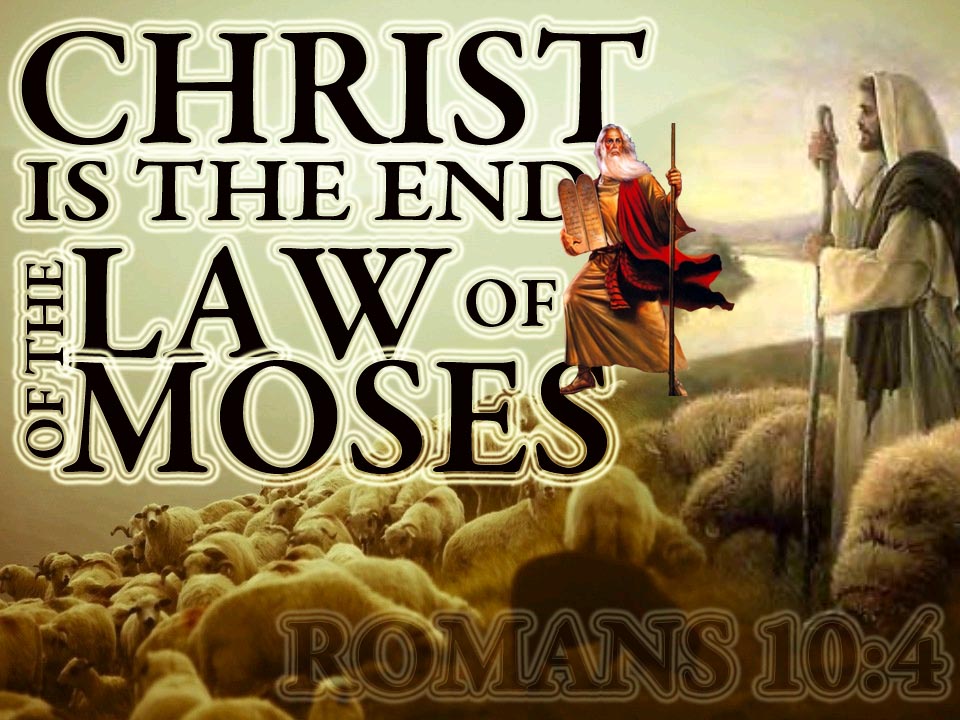
The Apostle Paul understood that Moses was speaking of eternal life when he compared and contrasted the Mosaic Covenant with the New Covenant: “For Moses writes about the righteousness that is based on the law, that the person who does the commandments shall live by them. But the righteousness based on faith says...For with the heart one believes and is justified, and with the mouth one confesses and is saved” (Rom. 10:5, 10). In other words, Paul is not making a distinction between the “life” that was promised in the Mosaic Covenant from the “life” that is promised in the New Covenant. Rather, Paul is contrasting how “life” was to be obtained in the Mosaic Covenant from how “life” is obtained in the New Covenant, which is a distinction between the works of the law and faith in Christ Jesus. For as Paul says in another place: “But law is not of faith, rather ‘The one who does them shall live by them’” (Gal. 3:12).

4. Christ Taught that Eternal Life was Promised in the Mosaic Covenant  

Moreover, when a certain person came up to Christ asking “what good deed must I do to have eternal life?” The Lord responded by saying, “If you would enter life, keep the commandments” (Matt. 19:16-18).[1] For even the Lord Jesus affirmed that it was not merely a long physical life but eternal life that the Law of Moses promised to those who loved God with all their hearts and loved their neighbor as themselves (Luke 10:25-29). Which conversely affirms that eternal death awaits all those who fail to love God in the slightest with all their hearts, minds, strength and souls. Calvin was right when he claimed, “It is quite certain that the primary promises, which contained that covenant ratified with the Israelites by God under the Old Testament, were spiritual and referred to eternal life.”[2]

5. If the Law was Spiritual, then the Promises Must Have Been Spiritual (i.e., Promising Eternal Life)

Moreover, because the Mosaic Covenant was a republication of the moral law of God, it by necessity promised eternal life for all who perfectly obeyed God. Unless the Law of Moses was something less than the perfect moral law of God, then it held out eternal life for those who kept it and eternal death for those who did not. Thus, Samuel Petto (1624-1711) concluded:

Now the Sinai covenant is a platform of the legal righteousness which was indispensably necessary unto life; there it is deciphered, delineated, and described, more clearly than in any other federal expressure. The Sinai covenant excels all other, in discovering what that righteousness is, upon which we enjoy eternal life.[3]

Again, NCT teaches that the Law of Moses merely demanded external obedience, and thus it would make
sense that external obedience cannot offer spiritual life. But, if the Law of Moses is spiritual (the perfect
moral law of God), then eternal life and death must be its ultimate blessing and curse.

6. Removes Christ from the Adamic Covenant of Works

And it is important to note that the covenant of works that God established in the Abrahamic and Mosaic Covenants is same as the covenant of works that was established with Adam, for it consisted of the same moral law with the same blessings and curses. Eschatological life and death were at the heart of both. As Edward Fisher writes, “the law delivered on Mount Sinai, and formerly engraven on man’s heart, was one and the same; so that at Mount Sinai the Lord delivered no new thing.”[4] Therefore, these two covenants of works are one and the same, but were issued with two different federal heads. This safely removes Christ from the membership of the broken Adamic Covenant of works, while placing Him in the revised covenant of works that was established in the Abrahamic and Mosaic Covenants.

Consequently, the federal head of the Adamic Covenant of works is Adam who brought death upon all humanity, while the federal head of the Abrahamic/Mosaic Covenant of works is Christ Jesus who thankfully brings life to all who are united to Him by faith. Thus, we are condemned in Adam who broke the first covenant of works but justified in Christ who fulfilled the second covenant of works. But again, the same moral law that was broken by the first Adam was the moral law that was satisfied by the second Adam (Rom. 5:12-21).

This also means that the Adamic Covenant of works is still currently holding Adam’s natural seed captive to the curses of the law (i.e., death), while the Abrahamic/Mosaic Covenant of works has been satisfied for all of Abraham’s spiritual seed who are heirs to the blessings of the law (i.e., life). In short, the first covenant of works (made with the first Adam) remains broken, while the second covenant of works (made with the second Adam) is fulfilled. Consequently, a person is either in union with the first Adam or in union with the second Adam. And depending upon which union that is, depends if that person is under law or under grace.

And just because it was impossible for the physical seed of Abraham to fulfill such a strict and demanding covenant did not mean that its promises and curses were nullified.[5] For their responsibility to obey was not contingent upon their ability to obey. This may seem unfair, but the moral law by its very nature cannot be anything but fair. And this is why the Mosaic Covenant was an administration unto death rather than unto life, for by the works of the law no flesh shall be justified.

Nevertheless, for this reason, the Mosaic Covenant was not hypothetical. The covenant of works condemns all those who are not found righteous in the sight of God’s moral law. Hell is proof that the terms of the covenant of works are unchangeable. The Cross of Calvary is proof that the covenant was not hypothetical.

For the blessings of the law to be established, then the physical seed of Abraham (i.e., Christ) had to fulfill the demands and the curses of the law. For God to be both just and merciful there is simply no way around this. Thus, for sinners, the law was given to awaken them to their own sinfulness and administer death, but for the righteous (i.e., Christ) it was given to establish life.

7. Christ Fulfilled the Law of Moses

Christ fulfilled is the moral law of God in His life and death. And if the Law of Moses is the moral law of God, then Christ fulfilled it. When the Bible speaks of Christ obeying the law, it is speaking primarily of the Law of Moses and not to the law of creation (which, nevertheless, I believe, that they are the same).

·          Matt. 5:17-19 Do not think that I have come to abolish the Law or the Prophets; I have not come to abolish them but to fulfill them. For truly, I say to you, until heaven and earth pass away, not an iota, not a dot, will pass from the Law until all is accomplished.
·
·   Gal 3:10-14 For all who rely on works of the law are under a curse; for it is written, "Cursed be everyone who does not abide by all things written in the Book of the Law, and do them." Now it is evident that no one is justified before God by the law, for "The righteous shall live by faith."   But the law is not of faith, rather "The one who does them shall live by them." Christ redeemed us from the curse of the law by becoming a curse for us—for it is written, "Cursed is everyone who is hanged on a tree"— so that in Christ Jesus the blessing of Abraham might come to the Gentiles, so that we might receive the promised Spirit through faith. 

Galatians 3:10-14 speaks of Christ fulfilling the Law of Moses in order to bring the spiritual blessings of Abraham to all who believe. For this reason alone, the Mosaic Covenant must have promised more than just temporal and physical blessings.

8. The promises in the Mosaic Covenant spoke of Eternal Realities  

Although the Mosaic Covenant was merely typological in the Old Testament dispensation, the promises spoke of eternal realities. For instance, take this quote by G. K. Beale:

…after promising that God would restore Israel and ‘multiply men’, and make them ‘increase and be fruitful’ (Ez. 36:10-11), he also promises a ‘multiplications’ of fruitfulness (36:29-30), so that Israel’s formerly desolated land will ‘become like the garden of Eden’ in which God ‘will increase their men like a flock’ (cf. 36:35-38). Then, in direct development of these preceding ideas and of Leviticus 26:6-12 (!), Ezekiel 37:26-28 again refers to that aspect of the promise of ‘multiplying them’ and ties it to Israel’s temple: ‘It will be an everlasting covenant…And I will…multiply them, and will set My sanctuary in their misdst forever. My dwelling place [or ‘tabernacle’] also will be over them; and I will be their God, and they will be My people. And the nations will know that I am the Lord who sanctifies Israel, when My sanctuary is in their midst forever.’[6]

Were these promises physical or spiritual? I would say they were both physical and spiritual. Of course, because of Israel’s failure to obey, the nation of Israel did not enter into the fulfillment of these promises, but regardless these promises pointed to the new heavens and the new earth where they would be ultimately fulfilled. And if this is the case, then the promises given in the Mosaic Covenant, although not fulfilled in the Old Testament dispensation, looked to the greater and eternal realities to come. For what national Israel was unable to bring about, we see Christ, the true Israel of God, establishing.

9. The Deficiency of Mosaic Covenant was not that It Promised only Temporal Blessings but that It was Unable to Establish the Spiritual Promises  

When the Scripture speaks of the Mosaic Covenant as being physical and the New Covenant as being spiritual, this does not mean that the Old Covenant was unconcerned about spiritual realities (e.g., circumcised heart, eternal life) or that the New Covenant is unconcerned about physical realities (e.g., a new earth, a resurrected body, etc…). Rather, the difference between the Old and New Covenants is that they approach the physical and spiritual concerns of the Abrahamic Covenant from two different directions or starting points.

For instance, the Old Covenant was ineffectual because it sought to reform the inner man by external means. For instance, the Mosaic Covenant started by issuing outward circumcision but afterwards it demanded inward circumcision. Moreover, once the Old Covenant law was etched in stone, it required inward obedience from the heart. Moreover, though the physical children of Abraham were given a physical land and established in a physical kingdom, they would not fulfill their ultimate purpose until they filled the land of promise (i.e., the earth) with the presence, knowledge, and glory of God as the spiritual and holy people of God. Yet, because the Old Covenant started from the outside, it remained ineffectual in establishing for its unregenerate membership the spiritual promise of the Abrahamic Covenant. For no matter how hard one tries, outward legislation (regardless of the purity of the laws) can never change sinful and depraved hearts.

On the other hand, the New Covenant is effectual in securing the physical promises of the Abrahamic Covenant because it starts not with the physical but with the spiritual realities first. For example, a circumcised heart precedes water baptism, and spiritual regeneration goes before outward obedience of the law. Moreover, before the saints inherit the world at the end of the age, they must be born again into a spiritual kingdom in the present age. The New Covenant will bring about universal peace, prosperity, and a new heavens and a new earth where only righteousness dwells, but only because it starts by calling out a spiritual people unto a heavenly kingdom in the midst of this fallen world first.

Therefore, in this sense, the promises of the Old and New Covenant are the same, but they have two different means in which they seek to accomplish their end objectives. As it were, the Old Covenant, by the works of the law, sought to enter the house of God through the back door, which always remains locked for the sinner. By grace, on the other hand, the New Covenant has opened the front door of the house of God for the believer through the finished work of Christ Jesus. For Christ went through the back door by obedience of the law so that he could open the front door for all who enter by faith.

For this reason, the New Covenant is superior to the Old Covenant. In that, unlike the Old Covenant, the grace of the New Covenant has the power to save sinners and usher believers into the presence of God because it begins by effectually changing their hearts.

Nevertheless, though God redeems the soul before He redeems the body, God revealed the law of the Old Covenant before He revealed the grace of the New Covenant. In other words, though the spiritual kingdom of this age comes before the creation of the new heavens and the new earth in the age to come, the spiritual kingdom of this age was foreshadowed by the physical kingdom of Israel in the previous age.

In the order of salvation, the spiritual comes before the physical, but in the order of revelation, the physical is revealed before the spiritual.


The Order of Revelation
Physical, then Spiritual
The Old Covenant, then the New Covenant
Law, then Grace
Do this, then Live
Ishmael, then Isaac
Animal Sacrifices, then Christ
Israel, then the Church

The Order of Salvation
Spiritual, then Physical
New Heart, then Obedience
Grace, then Works
Live, then do this
Redemption of the Soul, then Glorification of the Body
The Spiritual Kingdom, then the New Earth

Thus, in regards to the order of divine revelation, the ineffectual and physical realities of the Old Covenant, which were revealed first, were only shadows and types of the effectual and spiritual realities of the New Covenant, which were revealed afterwards. “For…the law has but a shadow of the good things to come instead of the true form of these realities” (Heb. 10:1).

But this only stands to reason. Because the Old Covenant could not fulfill the spiritual promises of the Abrahamic Covenant, even the physical promises of the Abrahamic Covenant were never fully fulfilled either. The physical seed, land, kingdom, and temple may have come first and looked like the real thing, but because of their inability to produce the inward and spiritual promises, they were merely pictures or empty and typological shadows of the spiritual and physical realities, which were to be established afterwards by the New Covenant. To put it more plainly, though the Mosaic Covenant promised eternal life it could not provide eternal life for the sinner, therefore the Mosaic Covenant at best was a temporal and typological covenant that pointed to the spiritual and eternal realities that would afterwards be established in the New Covenant.


For this reason, the Old Covenant was not only ineffectual in establishing the promises of Abraham, it was a temporal covenant that was not designed to last forever. The ineffectual shadows of the Old Covenant where to continue until the effectual and eternal realities of the New Covenant were establishment in Christ Jesus and then they were to pass away.

Conclusion

For fallen Israel, the Mosaic Covenant was unable to establish the spiritual and eternal promises of the Abrahamic Covenant. For them, the Law of Moses, was design to condemn them. But what Israel failed to do (due to the weakness of their sinful flesh), Christ, the physical child of Abraham (who was born under the Law of Moses), did. In this since the Law of Moses was not designed to condemn but to justify Christ. In a word, because of the fallen nature of the children of Abraham in the Old Testament dispensation, the Mosaic Covenant was merely typological and dealt with only temporal blessings, but because of Christ stratification of the Mosaic Covenant, the New Covenant users in the spiritual and eternal blessings that were promised in both the Abrahamic and the Mosaic Covenants.


[1] Italics mine.
[2] John Calvin, Institutes of the Christian Religion. Edited by John T. McNeill. Translated by Ford Lewis Battles. The Library of Christian Classics (Philadelphia: Westminster Press, 1977), 4.16.11.
[3] Samuel Petto, The Great Mystery of the Covenant of Grace (Stoke-on-Trent, UK: Tentmaker Publishers), 129. Italics mine.
[4] Edward Fisher, The Morrow of Modern Divinity (Ross-shire, UK: Christian Focus, 2009), 80.
[5] According to Edward Fisher, the inability to obey the Mosaic Covenant did not make the covenant unjust: “[F]or the Lord may justly require perfect obedience at all men’s hands, by virtue of that covenant which was made with them in Adam; and if any man could yield perfect obedience to the law, both in doing and suffering, he should have eternal life; for we may not deny (says Calvin) but that the reward of eternal salvation belongeth to the upright obedience of the law” (The Morrow of Modern Divinity, 85).
[6] G. K. Beale, The Temple and the Church’s Mission, 111